
Loading…
You've packed a box of clothes for your daughter studying in Kathmandu, or you're a small business owner in Pokhara trying to send fifteen kilos of pashmina scarves to a buyer in Biratnagar, or you're moving abroad and wondering how your furniture and kitchen items are even supposed to travel. At some point, someone tells you "just send it as cargo" and someone else says "no, courier is faster" — and neither of them explains why, or what it actually costs you if you pick wrong.
This confusion is common in Nepal because the two words get used loosely in everyday conversation. People say "courier" for anything shipped by a private company and "cargo" for anything that sounds big or international, without really knowing where one service ends and the other begins. That vagueness costs people money — either they pay courier rates for something that should have gone by cargo, or they wait a week for something that a same-day courier could have delivered.
This guide draws a clear, practical line between cargo and courier services in Nepal — what each one actually is, how pricing and speed differ, when each makes sense for personal shipments versus business shipments, and how customs and documentation change depending on which one you use for cross-border shipping. You'll also find a comparison table and answers to the 20 questions people ask most often before choosing between the two.
At the simplest level:
The line isn't always a hard number. It's really about how the shipment is handled: a courier treats your parcel as an individually tracked item moving through a fast delivery network, while cargo consolidates goods together — often with other shipments — and moves them as a larger, batched load. That difference in handling is what drives almost every other difference between the two: price, speed, documentation, and how much control you have over tracking.
Courier services in Nepal typically cover:
Courier shipments are usually picked up directly from your door, tracked with a shipment number, and delivered directly to the recipient's address — whether that's within the Kathmandu Valley, to another city in Nepal, or internationally.
For domestic courier needs, this is generally the more convenient and cost-effective choice for anything you could comfortably carry yourself, but don't have the time or the trusted contact to hand-deliver. If you've never booked one before, a step-by-step guide to booking domestic courier services in Nepal walks through the process from pickup request to delivery confirmation.
Cargo services are the right category when your shipment is:
In Nepal, cargo moves through a few main channels:
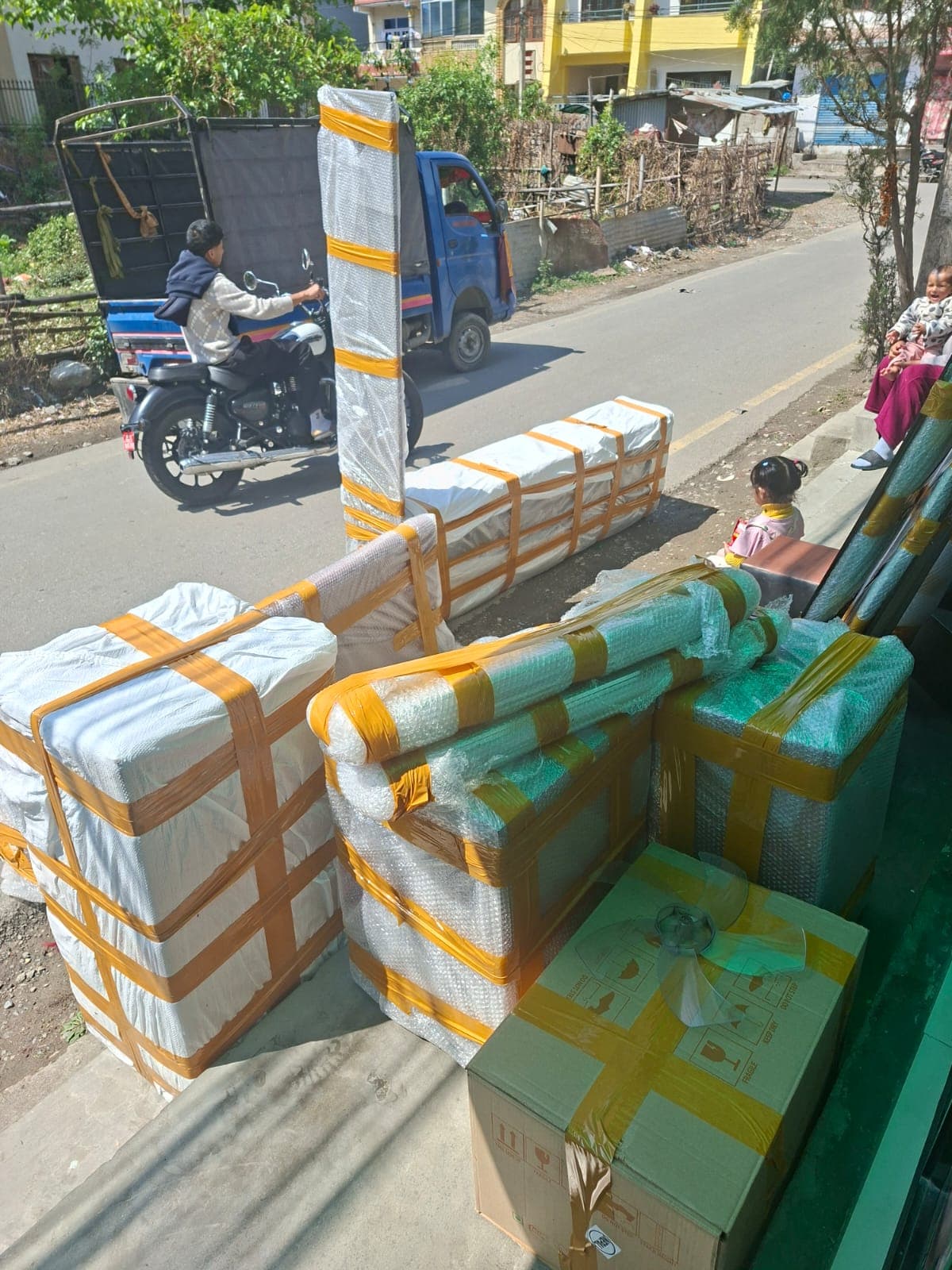
For domestic needs — sending goods or personal items between cities within Nepal — a dedicated cargo service in Nepal handles the heavier lifting that a courier simply isn't built for, including proper packing, loading, and delivery coordination for bulk or oversized items.
| Aspect | Courier | Cargo |
|---|---|---|
| Typical weight range | Roughly up to 30–50 kg per parcel (varies by provider) | No practical upper limit — from a few boxes to full container loads |
| Speed | Fast — often 1–3 days domestically, express options available | Slower — days to weeks depending on mode (road, air, sea) and distance |
| Pricing structure | Priced per kg or per parcel, often using dimensional (volumetric) weight for bulky-but-light items | Priced more efficiently per kg at volume, often per shipment/consignment |
| Handling | Individually tracked door-to-door parcel | Consolidated with other shipments, batch-handled |
| Best for | Documents, small parcels, urgent personal or business shipments | Furniture, bulk goods, business inventory, relocation shipments |
| Tracking | Usually real-time, per-parcel tracking number | Tracked at consignment level; less granular than courier tracking |
| Customs (international) | Often simplified/bundled by the courier for smaller personal shipments | Usually requires separate customs clearance, invoices, and sometimes a clearing agent |
| Typical modes used | Motorbike, car, or small van; air for international | Truck (road), air cargo, and sea freight (via Indian ports for Nepal) |
Exact weight cutoffs, pricing, and transit times vary by individual provider and by domestic versus international routing — always confirm current rates and limits directly before booking.
Within Nepal, the choice usually comes down to weight, urgency, and whether you're sending an individual item or several items together.
Choose domestic courier when:
Choose domestic cargo when:
A useful rule of thumb used across the logistics industry: shipments under roughly 30 kg, that fit standard parcel dimensions, are usually more cost-effective and faster through courier; anything heavier, bulkier, or shipped in multiple pieces together tends to be more economical through cargo, even if it takes a bit longer to arrive.
For shipments crossing Nepal's border, the courier-vs-cargo decision has bigger consequences because of customs.
International courier (used by companies handling personal parcels, documents, and small commercial shipments to and from Nepal) generally:
An international courier service is generally the right starting point for personal shipments — family parcels, documents for visa or academic purposes, or smaller business samples — where you want predictable delivery timing without managing customs paperwork yourself.
International cargo generally:
If you're relocating internationally and need household items, personal belongings, and larger shipments handled together — rather than as individual parcels — an international logistics service or a dedicated international relocation service is built for exactly this kind of consolidated, documentation-heavy shipment, which a standard courier simply isn't designed to handle.
People often assume cargo is "always cheaper" and courier is "always more expensive," but it's more specific than that:
Practical takeaway: if you're shipping one or two boxes, get a courier quote first. If you're shipping multiple boxes, furniture, or a full household's worth of items, get a cargo quote — the cost-per-kilogram gap tends to widen quickly as weight increases.
Scenario 1 — Sending your child's forgotten laptop charger from Kathmandu to their hostel in Pokhara: Courier. Small, light, urgent — exactly what courier is built for.
Scenario 2 — A small business sending 40 kg of handicrafts from Bhaktapur to a retailer in Biratnagar: Likely cargo, or a courier provider's cargo/bulk tier if they offer one — at this weight, per-kg cargo pricing usually wins.
Scenario 3 — Sending festival gifts (sel roti ingredients, clothing, a tika set) to a family member abroad: International courier — most diaspora-focused shipping services are structured exactly around this kind of personal parcel, with predictable transit times of a few days.
Scenario 4 — Relocating your household to another country and shipping furniture, kitchenware, and personal belongings together: International cargo, coordinated through an international relocation or logistics service, since this volume and mix of items needs consolidated handling and formal customs documentation, not individual parcel tracking.
Scenario 5 — An urgent contract or academic document that must arrive within 48 hours: Courier, ideally with an express option — cargo's slower, consolidated handling isn't built for this kind of urgency.
Scenario 6 — Moving to a new office and shipping desks, chairs, and files between two branch offices in different cities: Domestic cargo — this is bulky, non-fragile-document freight, better suited to a dedicated domestic courier service provider's cargo tier or a full cargo booking rather than parcel-by-parcel courier shipping.
For domestic shipments within Nepal, documentation is usually simple for both courier and cargo — sender and receiver details, a description of contents, and sometimes a declared value for insurance purposes.
For international shipments, the gap widens:
If you're unsure which category your international shipment falls into, it's worth asking the provider directly whether your goods qualify as a "personal parcel" (courier-eligible) or require formal cargo/freight documentation — the answer depends on value, weight, and sometimes the type of goods themselves.
Ask yourself these questions in order:
If you're still unsure after running through this, it's worth getting a quote for both — most Nepali logistics providers will tell you plainly which category your shipment falls into once they know the weight, dimensions, and destination.
Rather than leaving you to guess between courier and cargo, an experienced logistics provider looks at your actual shipment — weight, dimensions, urgency, and destination — and tells you plainly which service fits, instead of pushing whichever service is more profitable to sell.
Nepal City Packers and Movers handles both sides of this line: domestic courier service for smaller, time-sensitive parcels within Nepal, and cargo service in Nepal for bulk, business, and relocation shipments, along with international courier and international logistics support for cross-border needs — so you don't have to book with one company for parcels and hunt for a separate cargo provider when your shipment grows.
Courier and cargo aren't competing services — they're built for different jobs. Courier wins on speed, tracking, and simplicity for smaller, lighter, time-sensitive shipments. Cargo wins on cost-efficiency and capacity once your shipment gets heavier, bulkier, or crosses into business and relocation territory.
The mistake isn't picking "the wrong one" in some absolute sense — it's not checking weight, urgency, and customs requirements before booking. Once you know those three things, the right choice is almost always obvious.
1. What is the main difference between cargo and courier in Nepal?
Courier handles smaller, lighter, time-sensitive parcels with individual door-to-door tracking, while cargo handles heavier, bulkier, or consolidated shipments moved by road, air, or sea, usually at a lower cost per kilogram but with longer transit times.
2. What is the weight limit for courier services in Nepal?
It varies by provider, but most courier services are built for parcels roughly up to 30–50 kg. Beyond that, or for multiple boxes shipped together, cargo is usually the more practical and cost-effective option.
3. Is cargo always cheaper than courier?
Not always. Cargo becomes cost-effective at volume — a single small, light box may actually cost more per kilogram as cargo than as a courier parcel, since cargo pricing is structured around consolidated, heavier loads.
4. How long does domestic cargo take in Nepal compared to courier?
Courier is typically faster, often delivering within a few days domestically. Cargo transit times depend on the mode (road versus air) and route, and are generally longer since shipments are consolidated and handled in batches rather than as individually prioritized parcels.
5. Can I send furniture by courier?
Generally no — furniture exceeds standard courier weight and size limits. Furniture and similarly bulky items are handled through cargo or dedicated moving/relocation services instead.
6. Do I need customs clearance for domestic shipments within Nepal?
No, customs clearance applies to international shipments only. Domestic courier and cargo within Nepal require basic sender/receiver documentation but not customs paperwork.
7. What documents do I need for international cargo shipments from Nepal?
International cargo typically requires a commercial invoice, packing list, and sometimes a customs clearing agent, especially since Nepal's landlocked geography means most sea cargo is routed through a third-country port such as Kolkata.
8. Is international courier simpler than international cargo for customs?
Generally yes, for standard personal parcels — international couriers typically manage most customs documentation for individual shipments, while cargo, particularly commercial cargo, usually requires more formal paperwork.
9. What's the best option for sending gifts to family abroad during Dashain or Tihar?
International courier is usually the better fit — it's designed for exactly this kind of personal, time-sensitive parcel, with predictable delivery windows around festival seasons.
10. Can small businesses use cargo services for regular shipments?
Yes — cargo is generally the more economical option for businesses shipping inventory or stock in volume between cities or internationally, especially on a recurring basis.
11. Why is cargo pricing based on volume while courier pricing is based on weight or dimensions?
Cargo pricing reflects the batch, consolidated nature of the service, where cost efficiency comes from moving larger volumes together. Courier pricing reflects individual parcel handling, where dimensional (volumetric) weight accounts for space taken up in the delivery vehicle regardless of actual weight.
12. What happens if my shipment is too heavy for courier but too small for a full cargo booking?
Many providers offer a middle-tier bulk parcel or small-cargo option — it's worth asking directly, since this size range is common and most Nepali logistics companies have a practical solution for it.
13. Does Nepal have direct sea access for cargo shipments?
No — Nepal is landlocked, so international sea cargo is routed through Indian ports, most commonly Kolkata, before continuing overland into Nepal.
14. Is air cargo available for domestic shipments within Nepal?
Yes — several Nepali airlines operate scheduled domestic cargo services between major cities such as Kathmandu, Pokhara, Biratnagar, Bhairahawa, and Nepalgunj, which is faster than road cargo for time-sensitive bulk shipments.
15. How is insurance handled differently for courier versus cargo?
Both services generally offer insurance based on declared value, but it matters more for cargo shipments carrying higher-value goods, furniture, or business inventory, where potential loss amounts are significantly higher than a typical courier parcel.
16. What's the best option for relocating household items internationally?
International cargo, coordinated through an international relocation or logistics service, since household relocations involve multiple bulky items that need consolidated handling and proper customs documentation rather than individual parcel shipping.
17. Can I track my shipment with cargo the same way I can with courier?
Tracking is usually less granular with cargo — shipments are typically tracked at the consignment level rather than with the real-time, per-parcel tracking common with courier services.
18. Is courier a good option for sending documents internationally?
Yes — documents are light, time-sensitive, and typically fall well within courier weight limits, making courier the standard choice for passports, certificates, contracts, and academic paperwork.
19. What should I ask a provider before booking cargo instead of courier?
Ask about weight and dimension cutoffs, expected transit time for your specific route, whether customs documentation is included or your responsibility (for international shipments), and the total landed cost including any clearance charges.
20. Who should I contact if I'm not sure whether my shipment needs courier or cargo?
A logistics provider that offers both services can assess your shipment's weight, dimensions, and destination and tell you directly which category it falls into, rather than you having to guess based on general weight rules alone.

Nepal City Packers and Movers
Share:
Explore Our Range of Moving & Logistics Services

Experience fast and reliable domestic and international courier services with Nepal City Packers and Movers. Secure delivery for all your packages, locally and globally!

Explore additional services by Nepal City Packers and Movers, including loading, unloading, parking assistance, and more. Tailored solutions for all your needs!

Explore reliable two-wheeler transport services by Nepal City Packers and Movers. Safe, secure, and timely bike transportation locally or across Nepal. Contact us today!
 Nepal City Packers and Movers - Banepa, Kavre
 Top Packers and Movers - Bouddha, Kathmandu
 Professional Packers and Movers - Balaju, Kathmandu
 Reliable and Affordable Packers and Movers - Baluwatar, Kathmandu
 Top-Rated Packers and Movers - Maharajgunj, Kathmandu
 Leading Packing and Moving Service | Nepal City Packers and Movers - Durbarmarga, Kathmandu
 Nepal city packers and movers - Lalitpur, Nepal
 Nepal City Packers and Movers - Thimi, Bhaktapur
 Reliable Packers and Movers - Kupandole, Lalitpur
 Affordable and Reliable Packers and Movers - kalanki, Kathmandu