
Loading…

Search for a moving company in Kathmandu and you'll notice something odd within minutes: almost every business calls itself "packers and movers," a few say "movers and packers," and now and then someone advertises only as a "mover" or only as a "packing service." If you're about to hire someone for the first time, it's fair to wonder whether these are different services, whether you need both, and whether paying for one without the other could save you money.
This guide settles the movers vs packers question in plain terms. It explains what each role actually does, why the two are bundled together so often in Nepal, when it makes sense to hire only one of them, and how the choice affects your cost, your timeline, and who is responsible if something gets damaged. Nepal City Packers and Movers offers the whole range, from packing-only help to full relocation, so the advice below comes from how these jobs really work on the ground in Kathmandu Valley and beyond.
Packers prepare your belongings for the journey. They supply the materials, wrap and box your items, protect furniture, and label everything so it can be moved safely.
Movers take care of the physical relocation. They load the vehicle, transport your goods, unload at the destination, and place items where you want them.
In practice, the two jobs are two halves of one process: belongings have to be protected before they travel, and then they have to actually travel. That's why most companies in Nepal do both under one roof and use the combined name.
| Packers | Movers | |
|---|---|---|
| Main job | Protect and prepare items for transit | Load, transport, and unload |
| Typical tasks | Wrapping, boxing, cushioning, labeling, furniture padding | Lifting, loading, driving, unloading, placing items |
| Materials involved | Boxes, packing paper, bubble wrap, tape, blankets | Vehicle, ramps, straps, trolleys |
| Skills that matter most | Technique for fragile and awkward items | Safe lifting, load balancing, route knowledge |
| When it happens | Before the vehicle arrives (or on the morning of the move) | On moving day itself |
Packing is more technical than it looks. A good packing crew isn't just putting things into boxes; they're deciding how each item will survive hours of vibration, stacking, and handling.
Assessing what needs what. A set of steel utensils and a glass-topped table need entirely different protection. Packers sort items by fragility, weight, and shape before any tape comes out.
Supplying and choosing materials. Sturdy corrugated boxes in appropriate sizes, plain packing paper, bubble wrap, foam corners, furniture blankets, stretch film, and strong tape. Using the wrong material (or reusing worn-out boxes) is one of the most common causes of in-transit damage.
Wrapping and boxing. Items are wrapped individually, packed snugly with no empty space left to rattle, and sealed along every seam. Heavy items go in smaller boxes so nothing becomes too heavy to carry safely.
Special-item protection. Mirrors, framed art, and glass components stay upright and padded at the corners. Plates are packed on their edge. Electronics are cushioned on all sides, ideally in their original packaging. If you want a deeper walk-through of these techniques, our guide on how to pack fragile items safely for shifting covers them item by item.
Furniture preparation. Beds and wardrobes are disassembled where needed, hardware is bagged and labeled, and surfaces are padded so polished wood and upholstery aren't scratched during carrying.
Labeling. Boxes are marked by room and contents, with fragile and "this side up" indicators, so unloading and unpacking are organized rather than chaotic.
Packing is where most of the invisible protection of a move happens. When it's done well, nobody notices; when it's done badly, you discover it weeks later.
The mover's job starts when the packed items are ready to leave the building.
Loading. Heavy and bulky items go in first and low, boxes are stacked so weight is distributed properly, and fragile boxes are positioned where they won't carry the weight of anything else. A good loader makes a vehicle's space work harder, which can be the difference between one trip and two.
Securing the load. Items are braced and tied down so nothing shifts during braking, turns, or uneven roads. This matters in Kathmandu's stop-and-start traffic and even more on hill highways.
Transport. The vehicle is matched to the volume: a mini truck for a single room, a medium truck for a flat, a larger vehicle for a full house. Experienced drivers know the local access realities, like narrow lanes where a large truck can't reach the door, or Ring Road junctions that slow down peak-hour trips.
Unloading and placement. At the new address, items are carried in, furniture is reassembled, and boxes are placed in the correct rooms according to your instructions.
Handling difficult access. Moving heavy furniture down narrow stairwells, through tight doorways, or around corners in older buildings is a skill in itself. It's also where most scrapes and dents happen if the crew is too small or inexperienced.
If you only need this half of the job, our loading and unloading service covers exactly that: skilled labor for lifting and positioning, with or without a vehicle.
In a lot of markets, packing and moving are sold separately: one business supplies packing services, another supplies trucks and labor. In South Asia, including Nepal, it has become standard for companies to combine the two and describe themselves with the joint phrase, usually "packers and movers" (and sometimes "movers and packers," which means exactly the same thing).
There are practical reasons for this. A single crew that packs and loads is accountable for the whole chain. If the same team wrapped your television and then carried it down the stairs, there's no ambiguity about who handled it. It also saves coordination: you're not scheduling a packing team for Tuesday and a loading team for Wednesday, then hoping the boxes are ready when the truck arrives. And a combined service lets the company plan the vehicle size and crew count around the actual packing volume.
So when a company advertises "movers vs packers" as separate offerings, it usually means they'll unbundle the service if you ask. When it advertises "packers and movers," it generally means both are available together.
Here's how the two roles compare on the things that actually affect your decision.
| Factor | Packers only | Movers only | Packers and movers together |
|---|---|---|---|
| What you get | Professional packing, materials, and labeling | Loading, transport, unloading | Complete start-to-finish service |
| What you still handle | Loading, transport, unloading | Packing and all materials | Very little |
| Typical cost level | Moderate (materials and labor) | Lower to moderate (labor and vehicle) | Highest, but the most convenient |
| Time you invest | Moderate | High (packing is on you) | Low |
| Damage risk | Lower for packed items; transport risk is yours | Higher for items you packed yourself | Lowest overall, since one team controls everything |
| Best for | Fragile-heavy homes that you'll transport yourself | Budget moves with simple belongings | Larger homes, offices, tight timelines |
The takeaway: it isn't that one role is better than the other. They solve different parts of the same problem, and the right combination depends on what you can realistically handle yourself.
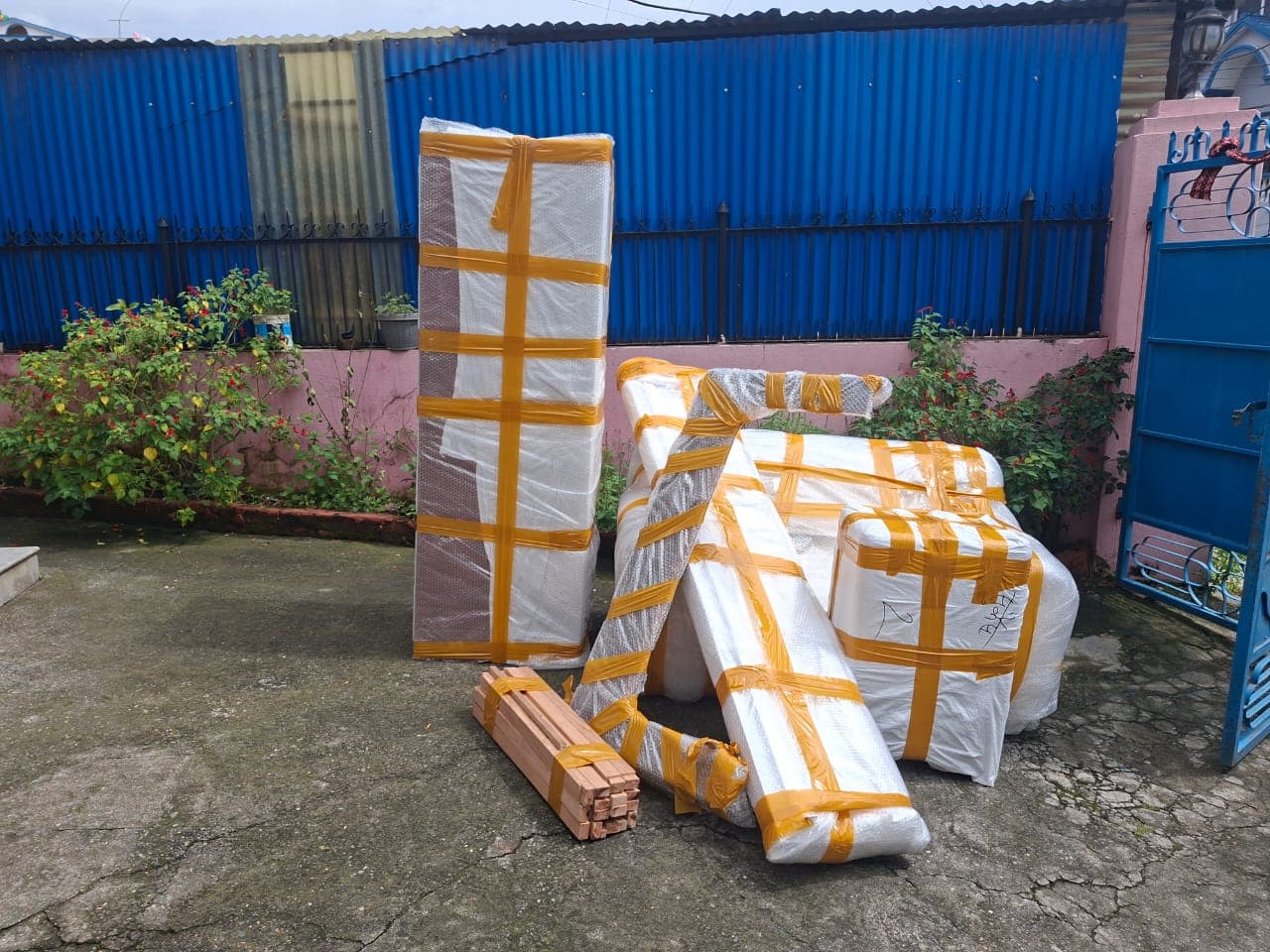
Packers-only help is less common than movers-only, but it fits a few real situations:
In each of these cases, you're essentially buying expertise and materials, not transport. If this sounds like your situation, removal and storage services are worth considering alongside packing, particularly if there's a gap between leaving one place and entering another.
Movers-only arrangements are very common, especially for smaller moves:
In Nepal this is usually offered as a "labor-and-transport" option: you pack, and the crew carries, loads, drives, and unloads. It's one of the most practical ways to save money without giving up professional handling of the heavy parts. If budget is your main concern, our tips on moving on a budget explain where the real savings are.
Most moves in Kathmandu fall into one of three arrangements, and it helps to map them to the movers vs packers split.
| Service level | Packers' role | Movers' role | What you handle |
|---|---|---|---|
| Full-service | Packs everything | Loads, transports, unloads, places | Almost nothing |
| Labor-and-transport only | None (you pack) | Loads, transports, unloads | Packing |
| Vehicle-only | None | Driver and vehicle only | Packing, carrying, loading, unloading |
A fourth option, the hybrid, is underused but sensible: you pack general items (clothes, books, kitchen basics), while professional packers handle only the fragile or valuable pieces, and movers do the transport. This captures most of the cost savings of self-packing while protecting the items where damage would hurt the most.
It's tempting to assume packers cost a fixed amount and movers cost another, but pricing doesn't work that way. In a combined service, cost is shaped by the same practical factors in every case:
| Cost factor | Why it matters |
|---|---|
| Volume of belongings | More items mean more packing time, more boxes, and a larger vehicle |
| Fragile and valuable items | More careful packing, more materials |
| Floor and lift access | No-lift buildings add labor time on both ends |
| Distance | Longer routes cost more in fuel and driver time |
| Furniture disassembly | Complex pieces take longer to dismantle and rebuild |
| Timing | Festival-season and short-notice bookings can carry a premium |
| Which services you choose | Packing included or not is one of the biggest levers |
Take timing seriously. Dashain and Tihar create the busiest period of the year for movers across Kathmandu. In 2026, Dashain runs from 11 to 25 October and Tihar from 7 to 11 November (you can verify dates against Nepal's public holiday calendar), and crews tend to be heavily booked in the weeks before. If your move is anywhere near those windows, book early.
Since an honest quote depends on your specific volume and access conditions, be skeptical of any company that gives a fixed price over the phone without asking about floor level, lift access, or what you're moving.
This is the difference many people only think about after something breaks.
When professional packers wrap and box your belongings and the same company moves them, responsibility is clear. The company controlled the packing and the transport, so any damage falls within its damage policy.
When you pack yourself and only hire movers, it's more complicated. The crew didn't control how well an item was protected inside its box, so coverage for damage to self-packed items may be more limited or work differently. That isn't a reason to avoid self-packing, but it is a reason to ask directly: "What does your damage policy cover for items I've packed myself?" Get the answer before the move, not after.
If you're moving fragile or irreplaceable items and want clear accountability, letting the same team pack and move them is usually the cleanest approach.
| Move type | Typical best fit |
|---|---|
| Single room or studio | Movers only (labor-and-transport), or vehicle-only for very small loads |
| Flat or apartment | Labor-and-transport, or full-service if fragile-heavy or time-limited |
| Full house | Full-service or hybrid |
| Office or corporate relocation | Full-service, with IT-appropriate packing |
| Long-distance or intercity | Full-service or hybrid, especially for fragile items |
| Storage-bound belongings | Packers (for proper protection) plus storage |
For more detail on specific move types, the residential moving service page outlines how home relocations are handled, and the office moving and shifting page covers business moves where packing and equipment handling matter even more.
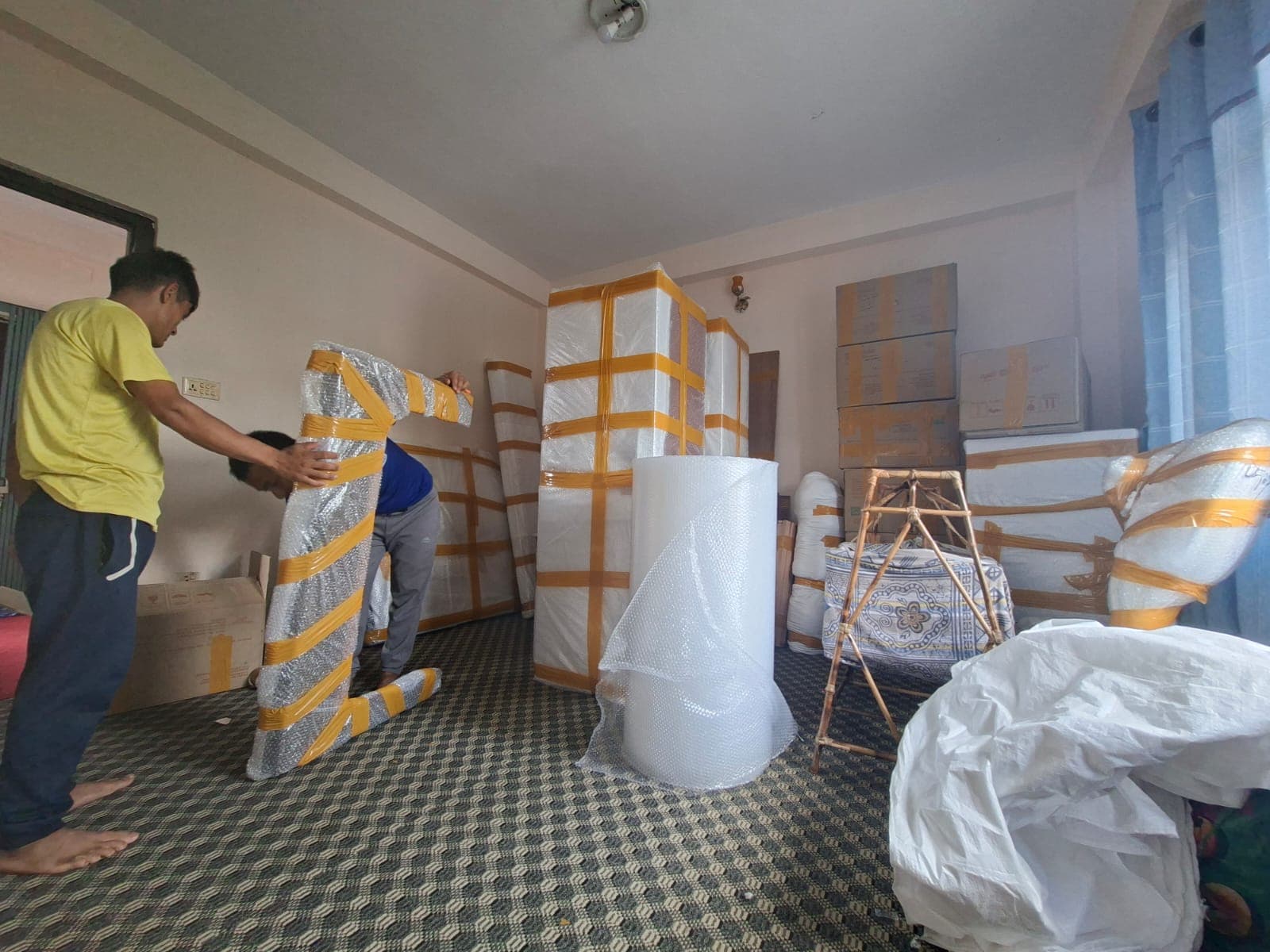
Because "packers and movers" is such a common label, it tells you very little on its own. These checks help you separate a capable company from one that simply uses the name:
Ask what materials they use. A proper crew brings sturdy boxes, packing paper, bubble wrap, furniture blankets, and tape. If the answer is vague, or the plan is to reuse old boxes, that's a warning sign.
Ask how fragile items and electronics are handled. You should hear specifics: individual wrapping, plates on edge, padded corners for glass, original packaging for electronics where available.
Ask about crew size and vehicle choice. A company should match both to your described load rather than sending the same truck and team to every job.
Ask about disassembly and reassembly. For beds, wardrobes, and modular furniture, this should be standard.
Ask about the damage policy in plain terms. If the answer is evasive, that's information.
Check recent reviews. Google reviews are harder to fake in volume than testimonials on a company's own site. Our guide on how to choose the best packers and movers company in Nepal walks through this in more depth.
Watch for red flags. A fixed quote without asking about your move, pressure to pay a large amount upfront, no verifiable presence, or reluctance to put things in writing are all worth taking seriously. We've covered these patterns in how to spot an unreliable mover in Nepal.
To make the split concrete, here is how a typical flat move with a full-service packers-and-movers team unfolds in Kathmandu.
Before moving day. The company gets your details (flat size, floor, lift access, distance) and gives a written quote. Packing materials are arranged.
Morning of the move. The packing team arrives, often with the loading crew, and walks through the flat with you to confirm what's moving and flag fragile or valuable items.
Packing. Rooms are packed in sequence, beginning with items you won't need right away. Furniture is disassembled where needed.
Loading. Once boxes are sealed and labeled, the movers load the vehicle in the proper order: heavy items low, fragile items protected and positioned last.
Transport. The vehicle travels to the new flat, accounting for Kathmandu's traffic patterns, especially around Ring Road junctions at peak hours.
Unloading and placement. Boxes and furniture go into the correct rooms. Furniture is reassembled. You do a walkthrough to confirm everything arrived.
For a studio or small one-bedroom flat, this often wraps up in a few hours; a larger flat can take a full day, especially where there's no working lift. For a closer look at how the whole process unfolds for apartments and houses, see our household move service guide.
A few related services are easy to mix up with packers and movers:
| Service | What it is | How it differs |
|---|---|---|
| Courier | Delivery of individual parcels and documents | Built for small items, not household or office relocation |
| Cargo/freight | Bulk or commercial goods transport | Priced by weight/volume, typically business-to-business |
| Transport/vehicle rental | Vehicle (and driver) only | No packing, and often no loading labor |
| Storage service | Safe keeping of belongings | Complements moving but doesn't move or pack on its own |
| Cleaning service | Cleaning the old or new home | Often paired with a move, but separate from packing and moving |
Knowing these differences keeps you from paying for the wrong thing. A couple of boxes bound for another city is a courier job; a full household is a packers-and-movers job; a pallet of retail stock is a cargo job.
Weather and timing matter for both halves of a move:
Monsoon season (roughly June through September) raises the stakes for movers: loading and unloading need proper waterproof covering, and any intercity trip should include extra time for possible road delays. Packers should use moisture-aware packing for electronics, documents, and wooden furniture.
Festival season compresses availability for both crews. Book early rather than expecting same-day service.
Dry winter and spring months are the easiest windows for most moves, with stable roads and more flexible scheduling. For a deeper look, our guide to the best time of year to move in Nepal breaks down each season.
Use this list when you call any company:
Nepal City Packers and Movers works on both sides of the divide. Our packing crews bring proper materials and technique for fragile and valuable items; our moving crews handle loading, transport, unloading, and placement with vehicles matched to your load. You can choose the full combined service, a labor-and-transport arrangement if you'd rather pack yourself, a vehicle-only option for very small loads, or a hybrid where we pack only your fragile items.
For businesses, we also handle corporate moving with IT-appropriate packing and flexible scheduling to limit downtime. Whatever you choose, you'll get a clear, written quote based on your actual details rather than a guess.
What is the difference between movers and packers?
Packers prepare your belongings for transit by supplying materials, wrapping, boxing, and labeling items. Movers handle the physical relocation by loading the vehicle, transporting goods, unloading, and placing items at the new location.
Are packers and movers the same thing?
They're two roles within one process. In Nepal and much of South Asia, most companies provide both and use the combined phrase "packers and movers," so in practice you usually hire them together.
Is "movers and packers" different from "packers and movers"?
No. The two phrases mean the same thing; the order of the words doesn't change the service.
Can I hire packers without movers?
Yes, some situations call for it, such as when you want professional packing for fragile items but are arranging transport yourself, or when you're packing belongings for storage. Ask the company whether they offer packing as a standalone service.
Can I hire only movers and pack myself?
Yes. This is common for smaller moves and is often offered as a labor-and-transport option, where you pack your own boxes and the crew handles carrying, loading, transport, and unloading.
Which is cheaper, hiring movers only or packers and movers together?
Movers only is generally cheaper, since you're not paying for packing labor and materials. The trade-off is your own time and the added responsibility for how well your items are packed.
Who is responsible if something breaks during a move?
If one company packs and moves your belongings, it's generally responsible under its damage policy. If you pack yourself, coverage for damage to those items may be more limited, so confirm the policy directly before the move.
Do packers supply their own boxes and materials?
Professional packers typically supply their own boxes, packing paper, bubble wrap, tape, and furniture padding as part of the service. Confirm what's included in your quote so there are no surprises.
Do movers disassemble and reassemble furniture?
In a full-service move, yes, this is standard for beds, wardrobes, and similar pieces. If you've booked a vehicle-only arrangement, it would be your responsibility.
How long does packing take compared with moving?
It depends on the size of the home. Packing a room can take a few hours, while a full house may take a day or more of professional packing, and the move itself then adds loading, transport, and unloading time.
Should I pack fragile items myself or leave them to professionals?
If you're confident in the technique and have proper materials, you can pack them yourself. If you're not, or if the items are valuable or irreplaceable, professional packing reduces the risk of damage and gives you clearer accountability.
Is a hybrid arrangement possible?
Yes. Many people pack general items themselves while leaving fragile or valuable pieces to professional packers, then have movers handle the loading and transport. It balances cost and protection.
Do I need both packers and movers for an office move?
Usually yes. Office moves involve IT equipment and sensitive documents that benefit from professional packing, along with careful loading and scheduling to minimize downtime.
What's the difference between movers and a courier service?
Couriers deliver individual parcels and documents, typically smaller and lighter shipments. Movers relocate entire households or offices, including furniture and large volumes of belongings.
Does hiring packers and movers cost more during festival season?
Often, yes. Demand and availability tighten significantly around Dashain and Tihar, which can affect both pricing and how quickly you can book.
How do I know a "packers and movers" company is genuine?
Ask about materials, crew size, fragile-item handling, and damage policy, check recent Google reviews, confirm a real contact number and presence, and get the quote in writing. Be cautious of fixed quotes given without any questions about your move and of pressure to pay a large amount upfront.
Do packers and movers offer storage?
Many do, as a separate or add-on service. It's useful when your move-out and move-in dates don't line up, and packers can prepare items properly for the storage period.
Can movers handle appliances like refrigerators and washing machines?
Yes, but appliances need specific preparation, such as defrosting refrigerators and securing washing machine drums, and split ACs should be uninstalled by a qualified technician. Ask the company how they handle each before booking.
Do I need to be present while packers and movers work?
It's strongly recommended, especially for the initial walkthrough and the final check, so you can flag fragile items, confirm what's being moved, and verify nothing is left behind.
Does Nepal City Packers and Movers offer packing only, moving only, or both?
All three. Nepal City Packers and Movers provides full-service packing and moving, labor-and-transport-only for people who prefer to pack themselves, vehicle-only for very small loads, and a hybrid where we pack only your fragile items.
The movers vs packers question has a simple answer once you see the pieces: packers protect your belongings, movers deliver them, and most moves benefit from having both, in whatever proportion your budget, schedule, and belongings call for. If you're unsure where your move falls, describe it and let a company recommend the right mix instead of guessing.
Ready to talk it through? Message Nepal City Packers and Movers on WhatsApp at +977 9851364869, tell us what you're moving and when, and we'll recommend packing, moving, or both, with a clear written quote before anything starts.

Nepal City Packers and Movers
Share:
Explore Our Range of Moving & Logistics Services

Experience fast and reliable domestic and international courier services with Nepal City Packers and Movers. Secure delivery for all your packages, locally and globally!

Explore additional services by Nepal City Packers and Movers, including loading, unloading, parking assistance, and more. Tailored solutions for all your needs!

Explore reliable two-wheeler transport services by Nepal City Packers and Movers. Safe, secure, and timely bike transportation locally or across Nepal. Contact us today!
 Nepal City Packers and Movers - Banepa, Kavre
 Top Packers and Movers - Bouddha, Kathmandu
 Professional Packers and Movers - Balaju, Kathmandu
 Reliable and Affordable Packers and Movers - Baluwatar, Kathmandu
 Top-Rated Packers and Movers - Maharajgunj, Kathmandu
 Leading Packing and Moving Service | Nepal City Packers and Movers - Durbarmarga, Kathmandu
 Nepal city packers and movers - Lalitpur, Nepal
 Nepal City Packers and Movers - Thimi, Bhaktapur
 Reliable Packers and Movers - Kupandole, Lalitpur
 Affordable and Reliable Packers and Movers - kalanki, Kathmandu