
Loading…
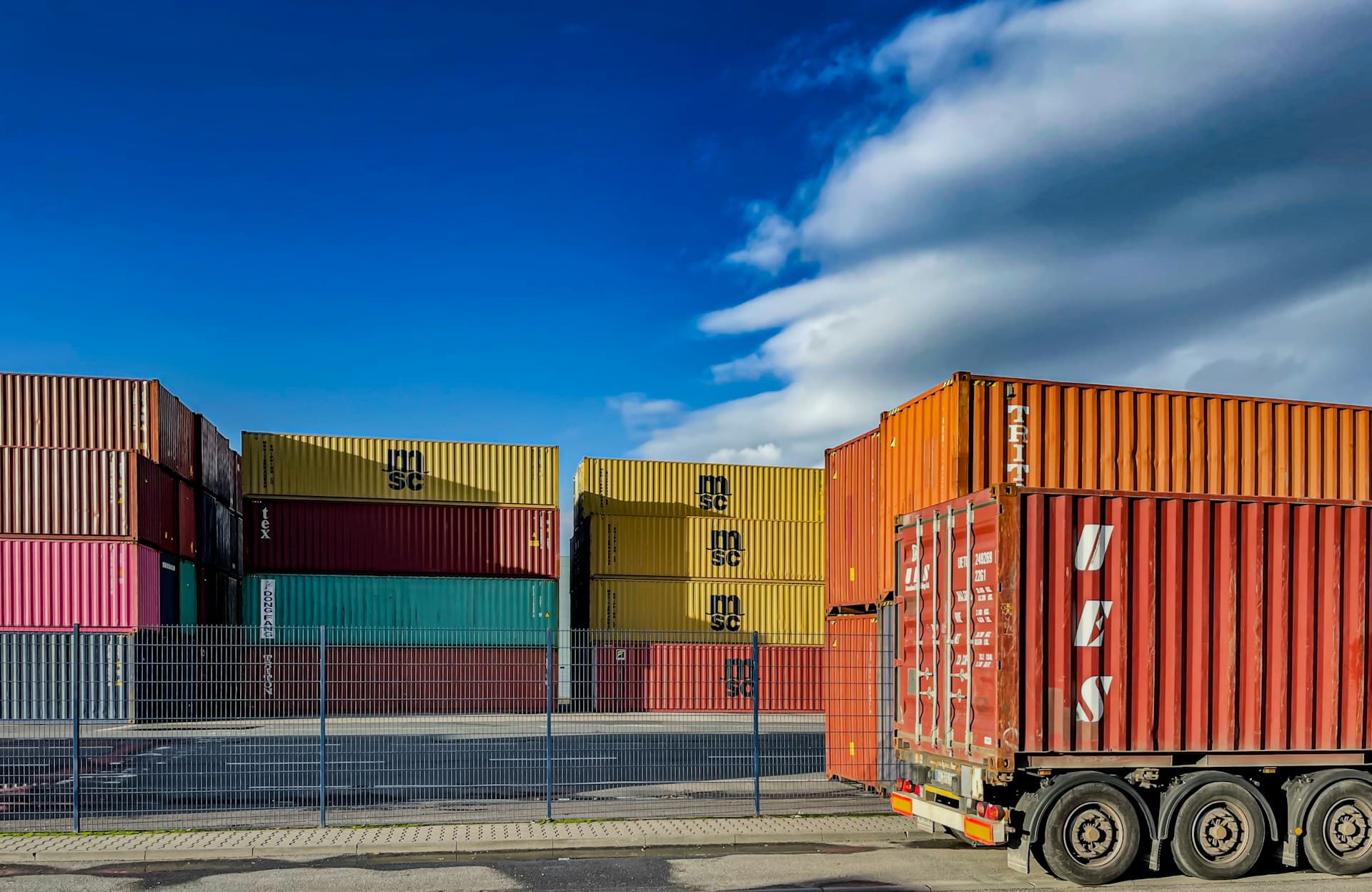
Relocating an entire household internationally is a different category of move altogether. It's not a truck and a crew for a day — it's furniture, appliances, and years of belongings loaded into a shipping container, sent across an ocean, cleared through customs in a country that isn't Nepal, then trucked overland across the Indian border before finally reaching your new (or original) home.
For Non-Resident Nepalis returning after years abroad, for foreigners relocating to Kathmandu for work, or for Nepali families moving overseas, understanding how container moving actually works — the shipping mechanics, the customs rules, the realistic timeline — makes the difference between a smooth transition and months of confusion and unexpected cost.
This guide covers exactly that: how international container moving service works for Nepal specifically, why the country's landlocked geography shapes the entire process, what customs rules apply to household goods, what genuinely affects cost and timeline, and how Nepal City Packers and Movers supports this process on the Nepal side — packing, coordination, and final-mile delivery once your container's contents actually reach Nepali soil.
A container move involves packing your household belongings — furniture, appliances, personal items, sometimes vehicles — into a standard shipping container, most commonly a 20-foot or 40-foot unit, which is then transported by sea to the nearest usable port, and from there overland into Nepal. This is fundamentally different from a domestic move within Nepal (covered in earlier guides in this series) because it involves ocean freight, customs clearance in more than one country, and considerably more paperwork and lead time.
There are two standard approaches to container shipping, both of which apply to household relocation:
FCL (Full Container Load) means your household goods fill an entire container by themselves — no sharing with anyone else's shipment. This is typically the choice for a full household's worth of belongings, and means your goods aren't handled or repacked alongside someone else's during transit, reducing handling risk.
LCL (Less than Container Load) means your goods share a container with other shipments, which is more affordable for smaller volumes but generally involves more handling (since goods are consolidated and later separated) and can add time to the process.
| Shipping Type | Best For | Trade-off |
|---|---|---|
| FCL (Full Container Load) | Full household relocations, larger volumes | Costs more if you don't fill the container, but less handling risk |
| LCL (Less than Container Load) | Smaller shipments, partial household moves | More affordable per item, but more handling and often longer transit |
This is the single most important fact to understand before planning a container move to or from Nepal: Nepal is landlocked and has no seaport of its own. Every shipping container destined for Nepal must first travel by sea to a port in a neighboring country — almost always Kolkata, India — and then continue its journey overland into Nepal by road or rail.
From Kolkata, containers typically move toward Nepal via rail or truck to an Inland Container Depot (ICD) on the Nepal side of the border. The most significant of these is the Sirsiya ICD, located near Birgunj, which functions as Nepal's primary dry port for container cargo.
This facility is connected to the Indian rail network via the Raxaul–Sirsiya railway line, which is used specifically for freight transport between the Indian border town of Raxaul and the Sirsiya depot in Nepal. Once a container clears customs at this dry port, its contents continue their journey — typically by road — to their final destination within Nepal, whether that's Kathmandu, Biratnagar, Pokhara, or elsewhere.
This overland leg is why international movers quote total transit times in the range of roughly 28 to 55 days for a container shipment to reach Nepal, depending on the origin country, the specific shipping line's schedule, any transshipment delays at major hub ports, and the time needed for the overland journey and customs clearance once the container reaches South Asia.
Monsoon-season conditions and general port congestion can extend this further, so building in a genuine buffer — rather than planning around the fastest possible estimate — matters considerably for anyone timing a move around a specific move-in date.
Understanding the actual physical journey helps set expectations and explains why this process takes the time it does:
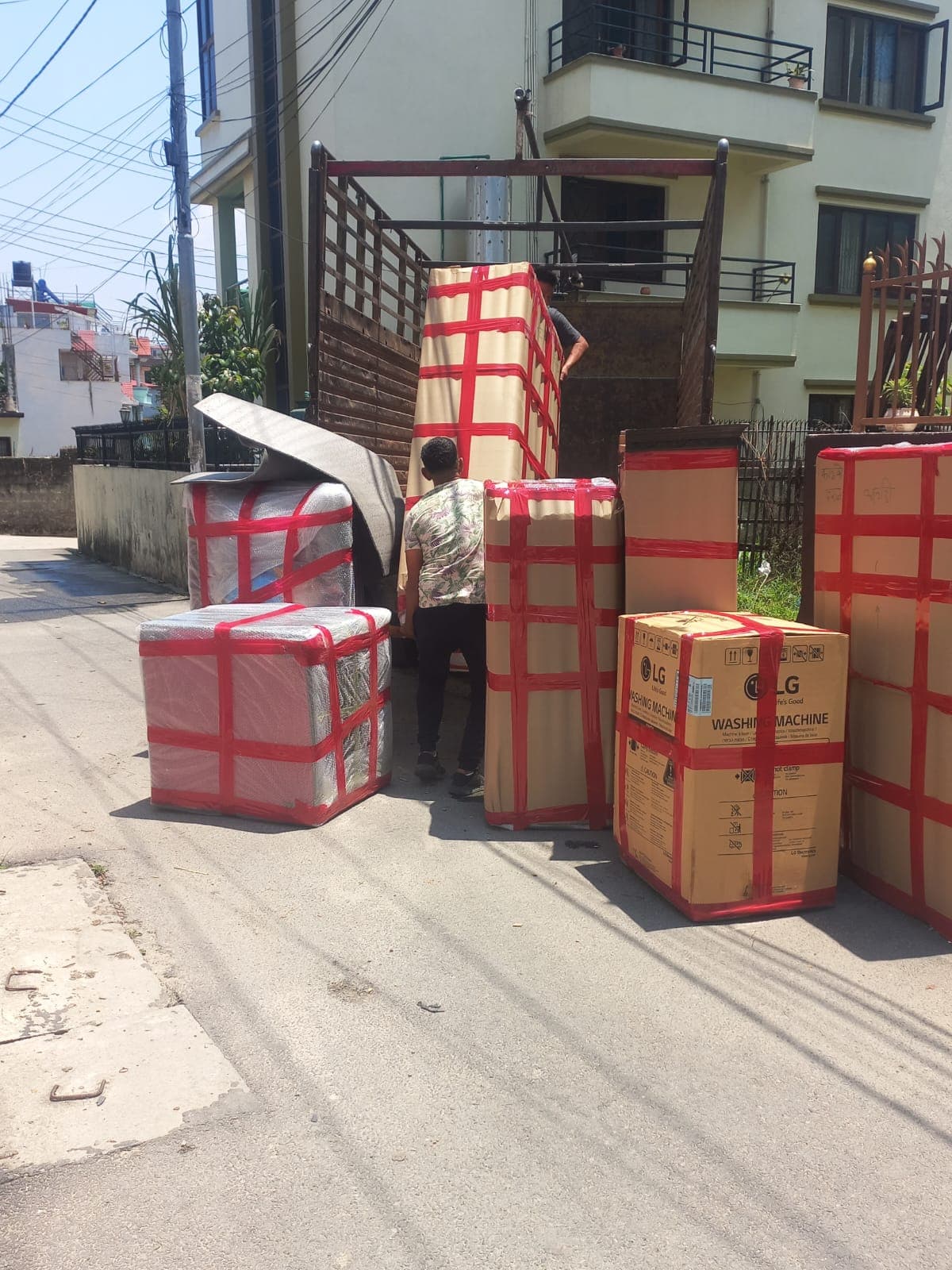
Step 1 — Packing and container loading at origin. Your household goods are packed (ideally by professionals experienced in international shipping standards) and loaded into the container at your current location, whether that's a home in the US, Europe, Australia, the Gulf, or elsewhere.
Step 2 — Trucking to the origin port. The loaded container travels by truck to the nearest major seaport in your country of origin.
Step 3 — Ocean freight to Kolkata. The container travels by ship to Kolkata port in India — the nearest major seaport to Nepal and the standard gateway for the vast majority of Nepal's international shipping, given the country's landlocked status.
Step 4 — Port handling and customs pre-clearance at Kolkata. The container is unloaded, processed through Indian port customs and handling procedures, and prepared for onward transport toward Nepal.
Step 5 — Overland transport to the Nepal border and ICD. The container moves by rail or road from Kolkata toward Nepal, typically arriving at the Sirsiya Inland Container Depot near Birgunj, one of Nepal's key dry ports for handling international container cargo.
Step 6 — Nepal customs clearance. The container is processed through Nepal's customs authorities at the dry port, with duty and tax treatment depending on the nature of the goods and the importer's eligibility for any applicable exemptions (covered in detail below).
Step 7 — Final-mile delivery. Once cleared, the container's contents are transported to their final destination — your new home in Kathmandu, Pokhara, Biratnagar, or elsewhere — where unloading, unpacking, and setup take place.
This is the stage where a local partner genuinely matters: Nepal City Packers and Movers supports this final-mile leg — coordinating delivery from the dry port or the point where your container's contents are released, unloading, and getting your belongings properly placed and set up in your new home, working alongside your international shipping company's Nepal-side coordination.
This is the area where accurate information matters most, since misunderstanding customs treatment can lead to unexpected costs or delays.
Nepal customs generally allows duty-free import of used household goods for individuals who hold a valid visa and have lived abroad for at least 12 months — a provision specifically designed for returning Nepalis and others relocating to Nepal after an extended period living overseas.
This is a meaningful benefit, since it can substantially reduce the cost of relocating a household's worth of used furniture, appliances, and personal belongings compared to importing new goods commercially.
To take advantage of this, the required documentation typically includes:
Because customs rules, exact duty rates, and documentation requirements can be adjusted by Nepal's Department of Customs and are also subject to how individual shipments are assessed at the point of entry, it's essential to confirm the current, specific requirements for your situation directly with your international shipping company or a licensed customs agent before finalizing your move — general guidance like this should inform your planning, not replace a direct check against current regulations for your specific case.
Container shipping costs vary considerably based on several genuine factors, and any provider quoting a single flat number without knowing these details is giving a rough estimate at best:
| Factor | Why It Matters |
|---|---|
| Container size (20ft vs 40ft) | Larger containers cost more but hold considerably more volume; a 20ft container typically suits a smaller household or apartment's worth of goods, while a 40ft suits a larger household |
| FCL vs LCL | FCL costs more upfront but avoids the handling and consolidation involved in sharing a container |
| Origin country and port | Distance from the origin port to Kolkata, and the specific shipping line's rates, affect base freight cost |
| Inland transportation distance within Nepal | The distance from the Sirsiya ICD (or another entry point) to your final destination within Nepal affects final-mile delivery cost |
| Customs duty and handling at Kolkata/Birgunj ICD | Port handling fees and any applicable customs charges factor into total landed cost |
| Packing and insurance | Professional packing to shipping standards, and insurance coverage for the journey, both add to overall cost but reduce risk |
| Documentation and customs agent fees | Using a licensed customs agent for clearance, while not always mandatory, is common and adds a service fee |
As a general reference point, some international movers estimate total costs for household relocations to Nepal in a broad range — reportedly from around $5,400 to $23,800 depending on shipment size and specific circumstances, with smaller shipments (like the contents of a two-bedroom apartment) toward the lower end and larger household volumes toward the higher end.
These figures should be treated as a general planning reference rather than a firm quote — actual cost depends heavily on your specific origin, shipment size, and current shipping rates, which fluctuate over time.
Realistic total transit time for a container shipment to Nepal generally falls in the range of 28 to 55 days, though this depends on several variables:
Given this range, anyone planning a move around a specific date — a lease start, a job start date, a school term — should build in a genuine buffer rather than assuming the fastest-case scenario, and should communicate clearly with their shipping provider about realistic timing throughout the process.
Household goods — furniture, appliances, personal belongings, books, and general household items — are the most common and straightforward category for container shipment to Nepal, particularly under the used-goods duty exemption for returning residents described above.
Vehicles can also be shipped internationally via container or through RoRo (roll-on/roll-off) shipping methods, though importing a vehicle into Nepal involves its own separate and generally more complex set of customs regulations, duties, and registration requirements that go well beyond household goods rules — this is a substantial enough topic that it deserves its own dedicated research and consultation with a customs agent if you're considering it, rather than assuming household goods exemptions apply.
Restricted or prohibited items generally follow similar patterns to other international shipping — hazardous materials, weapons, certain electronics or communication equipment requiring specific permits, narcotics and controlled substances, and culturally protected items (antiques, religious artifacts) subject to Nepal's heritage protection regulations.
Always confirm your complete inventory against current restrictions with your shipping company or a customs agent before finalizing your packing list.
Packing for an international shipping container involves considerations well beyond a standard domestic move, given the multi-week journey, multiple handling points, and ocean transit involved:
| Container Size | General Capacity Guide | Best Suited For |
|---|---|---|
| 20-foot | Roughly equivalent to a smaller household or apartment's furnishings | Smaller households, apartments, individuals with moderate belongings |
| 40-foot | Considerably larger capacity, suited to a full family home's worth of goods | Larger households, families with substantial furniture and belongings |
Choosing correctly matters for both cost and practicality — an undersized container means either leaving belongings behind or needing a second shipment (a costly and time-consuming complication given the multi-week journey involved), while an oversized container for a smaller shipment means paying for unused capacity, particularly relevant for FCL bookings.
A genuine, detailed inventory assessment before booking — ideally with input from an experienced international mover — is the best way to get this decision right the first time.
This is where the process shifts from being primarily about international shipping logistics to needing genuine local expertise — and it's the part of the journey where Nepal City Packers and Movers' role becomes central.
Once your container clears customs at the Sirsiya ICD or another entry point, the contents need to be transported to your final destination — often Kathmandu, but potentially Pokhara, Biratnagar, or elsewhere in Nepal. This final leg involves several considerations that mirror the domestic long-distance moving guidance covered elsewhere in this content series: appropriate vehicle sizing for the volume being transported, realistic timing given road conditions and distance from the dry port to your destination, and careful handling for items that have already traveled thousands of kilometers and don't need additional risk added on the final stretch.
Unpacking and setup at the destination is where local expertise genuinely earns its value — furniture reassembly, careful unpacking of items that have been in transit for weeks, and placement according to your new home's layout, ideally coordinated so the transition from "container arrives at the dry port" to "household is functional in the new home" happens as smoothly and quickly as possible.
Coordination with your international shipping company matters too — a good local partner communicates clearly with whichever international mover or freight forwarder handled the origin-side and shipping logistics, so there's a single, coordinated plan rather than two disconnected halves of the same move.
Nepal City Packers and Movers supports exactly this stage of an international container relocation — working with the arrival of your shipment at Nepal's entry point, handling final-mile transport to your destination anywhere in Kathmandu Valley or beyond, and providing the careful unpacking and setup that a household deserves after such a long journey.
While the primary meaning of "container moving service" in this context is international relocation, it's worth briefly addressing the domestic use of container-scale trucks, since the term occasionally comes up in this sense too. For very large domestic moves — substantial house relocations, bulk business inventory transfers, or major office relocations involving considerable volume — a larger, container-style truck may be the appropriate vehicle choice within Nepal's domestic transport network, distinct from the mini trucks, pickups, and medium trucks covered in earlier moving guides in this series.
This is a smaller-scale use of the term compared to international shipping containers, but worth mentioning for completeness — if your "container moving" search is actually about a large domestic vehicle rather than international shipping, Nepal City Packers and Movers' house and office shifting services (covered in dedicated guides) are the more directly relevant starting point.
A few genuine pitfalls worth knowing about in advance:
Not planning for the final-mile leg within Nepal. Some people focus entirely on the international shipping logistics and treat the final delivery within Nepal as an afterthought, when in reality it deserves its own planning — vehicle sizing, timing, and a local partner who can handle unpacking and setup professionally after such a long journey.
Given the complexity and cost involved in a container move, these checks matter more here than for any other move type in this guide series:
Confirm your international shipping company's specific experience with Nepal as a destination — given the country's landlocked status and the specific overland route through Kolkata and the Sirsiya ICD, genuine route-specific experience matters more than general international moving claims. Ask for a clear breakdown of what's included in your quote — freight, port handling, customs clearance support, and final-mile delivery within Nepal are often separate line items, and it's worth knowing upfront what's covered and what isn't.
Confirm insurance coverage details for the full journey, given the multi-week transit and multiple handling points involved. Ask specifically about their experience with Nepal's customs documentation requirements, particularly the used-household-goods duty exemption, since getting this wrong can mean unexpected charges. And plan your local, Nepal-side partner — for coordination of final-mile delivery, unloading, and setup — separately and early, rather than assuming your international mover automatically handles this final stage with the same local expertise a Kathmandu-based provider brings.
Nepal City Packers and Movers works specifically at this local coordination point — receiving and transporting your shipment's contents from Nepal's entry point to your final destination, and handling the careful unpacking and setup your household needs after weeks of international transit, alongside its established domestic moving, cargo, and courier services.
8-12 weeks before departure: research and confirm your international shipping company, get an accurate volume assessment to choose between a 20-foot or 40-foot container (or LCL if your volume is smaller), and begin confirming your customs documentation eligibility (visa status, time spent abroad, required paperwork).
4-6 weeks before: finalize your detailed packing inventory, arrange professional packing if using that service, and confirm your container booking and expected sailing schedule.
Container loading and departure: your goods are packed, loaded into the container, and begin the journey — trucking to the origin port, then ocean freight toward Kolkata.
During transit (typically several weeks): this is the period to finalize your local, Nepal-side arrangements — confirming with a local partner like Nepal City Packers and Movers for final-mile delivery once your shipment clears Nepal customs, and preparing your new home for the household's arrival.
Arrival and customs clearance at Kolkata, then overland to Nepal: your container moves through Indian port procedures, then overland toward the Sirsiya ICD or another Nepal entry point, followed by Nepal customs clearance.
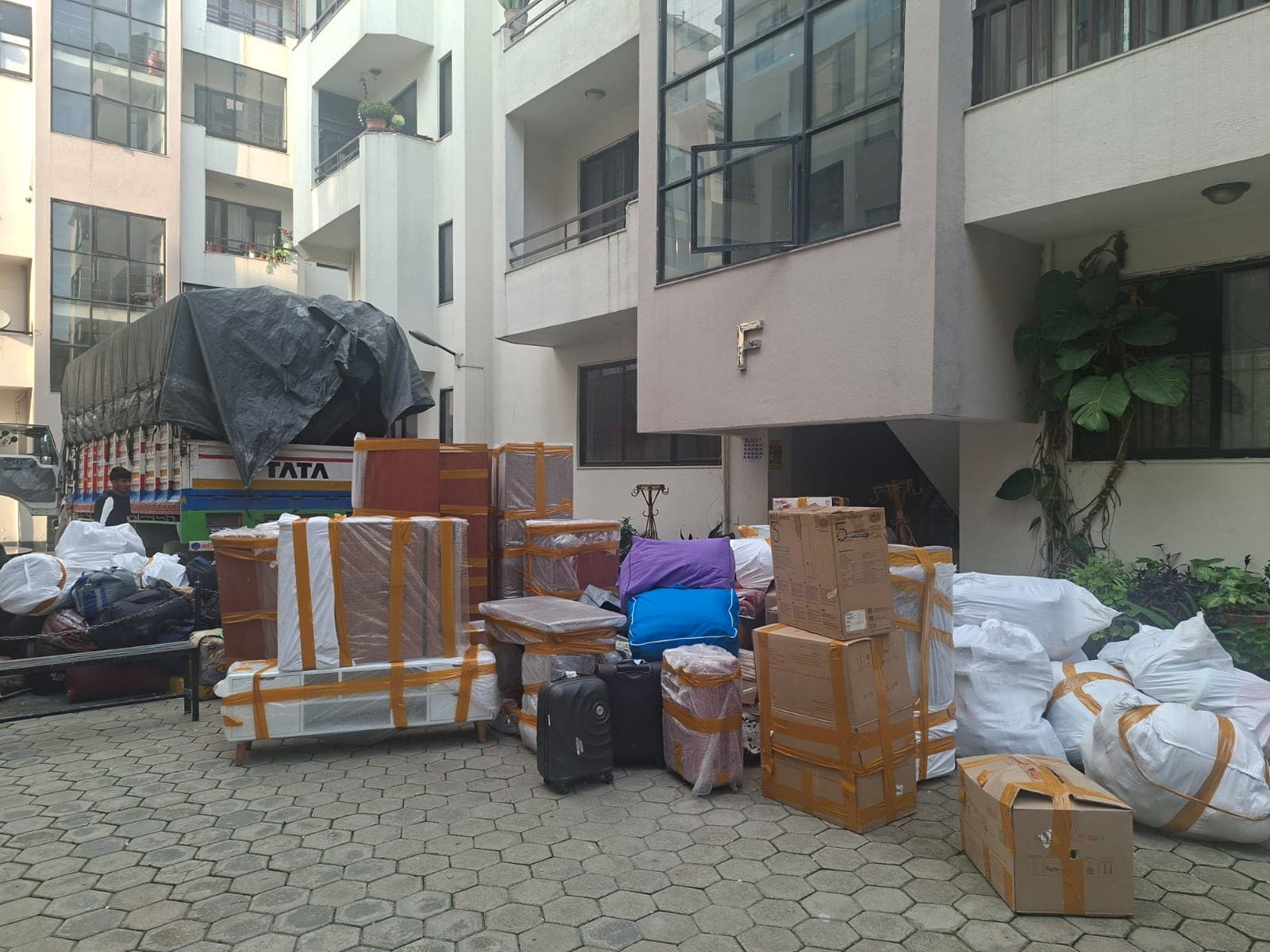
Final-mile delivery and setup: once cleared, your belongings are transported to your final destination within Nepal, unloaded, and set up in your new home — the stage where local expertise and careful handling matter most, given how far your belongings have already traveled.
Can I ship household goods directly to Nepal by sea?
No — Nepal is landlocked with no seaport of its own. All sea-freight shipments to Nepal travel first to a port in a neighboring country, most commonly Kolkata in India, and then continue overland into Nepal by road or rail.
How long does it take for a shipping container to reach Nepal?
Most international shipments arrive in roughly 28 to 55 days, depending on the origin country, sailing schedule, and any transshipment delays. Monsoon-season conditions and port congestion can extend this further, so it's wise to plan with a genuine buffer.
Do I have to pay customs duty on used household goods when relocating to Nepal?
Nepal customs generally allows duty-free import of used household goods for individuals holding a valid visa who have lived abroad for at least 12 months. Required documents typically include your passport copy, visa, a detailed packing list, the bill of lading, and an arrival letter — confirm current specific requirements with a customs agent or your shipping company before finalizing your move.
What's the difference between FCL and LCL shipping for a household move?
FCL (Full Container Load) means your goods have the entire container to themselves, generally suited to a full household's worth of belongings. LCL (Less than Container Load) means sharing a container with other shipments, which is more affordable for smaller volumes but typically involves more handling and can add to transit time.
Should I choose a 20-foot or 40-foot container for my move?
This depends on your total volume of belongings — a 20-foot container generally suits a smaller household or apartment's worth of furnishings, while a 40-foot container suits a larger family home. An accurate inventory assessment before booking helps avoid paying for unused capacity or running short on space.
What happens once my container reaches Nepal — do I need a separate local mover?
Yes, typically. Once your shipment clears customs at Nepal's entry point (commonly the Sirsiya ICD near Birgunj), it needs to be transported to your final destination, then unloaded and set up. This final-mile stage is where a local Nepal-based provider like Nepal City Packers and Movers plays a genuinely important role, working alongside your international mover's shipping and customs coordination.
Can I ship a vehicle to Nepal along with my household goods?
Vehicles can be shipped internationally, but importing a vehicle into Nepal involves separate, generally more complex customs regulations, duties, and registration requirements beyond the rules covering household goods. This deserves dedicated research and consultation with a customs agent if you're considering it.
How much does it cost to ship a container of household goods to Nepal?
Costs vary considerably based on container size, origin country, whether you choose FCL or LCL, and inland transportation distance within Nepal. As a broad reference, some international movers estimate total costs in a range of roughly $5,400 to $23,800 depending on shipment size and circumstances — treat this as a general planning reference, and get a specific quote based on your actual shipment.
What items are restricted from shipping to Nepal in a container?
Common restrictions include hazardous materials, weapons, certain electronics or equipment requiring special permits, narcotics and controlled substances, and culturally protected items like certain antiques. Always confirm your specific inventory against current restrictions with your shipping company or a customs agent.
Does monsoon season affect container shipments to Nepal?
Yes, monsoon-season conditions and associated port congestion can extend transit and clearance timelines beyond standard estimates, particularly for the overland leg through India into Nepal. It's worth factoring this into your planning if your shipment's timeline overlaps with the monsoon period (roughly June through September).
What documents do I need to claim the duty exemption on used household goods?
Typically a copy of your passport, your visa or proof of residency status, a detailed packing list, the bill of lading, and an arrival letter confirming your relocation to Nepal. Since exact requirements can be adjusted by Nepal's customs authorities, confirm the current specific documentation needed directly with your shipping company or a licensed customs agent.
Can Nepal City Packers and Movers handle the entire international shipping process from origin to Nepal? Nepal City Packers and Movers' core strength is the Nepal side of this process — final-mile delivery from your shipment's entry point (such as the Sirsiya ICD near Birgunj) to your destination within Nepal, along with careful unpacking and setup.
For the international shipping, ocean freight, and origin-country logistics, you'll typically work with an international shipping company or freight forwarder, with Nepal City Packers and Movers coordinating the local, on-the-ground portion of your relocation.
A container move is genuinely one of the most complex relocations covered in this guide series — spanning ocean freight, cross-border customs, and a multi-week journey before your belongings ever reach Nepali soil. Getting it right means understanding the realistic timeline, the customs documentation that actually matters, and planning the final-mile delivery within Nepal with the same care as the international shipping itself.
When your shipment reaches Nepal, Nepal City Packers and Movers is ready to take it the rest of the way — from the dry port to your new home, unpacked, set up, and ready for the life you're building here.

Nepal City Packers and Movers
Share:
Explore Our Range of Moving & Logistics Services

Experience fast and reliable domestic and international courier services with Nepal City Packers and Movers. Secure delivery for all your packages, locally and globally!

Explore additional services by Nepal City Packers and Movers, including loading, unloading, parking assistance, and more. Tailored solutions for all your needs!

Explore reliable two-wheeler transport services by Nepal City Packers and Movers. Safe, secure, and timely bike transportation locally or across Nepal. Contact us today!
 Nepal City Packers and Movers - Banepa, Kavre
 Top Packers and Movers - Bouddha, Kathmandu
 Professional Packers and Movers - Balaju, Kathmandu
 Reliable and Affordable Packers and Movers - Baluwatar, Kathmandu
 Top-Rated Packers and Movers - Maharajgunj, Kathmandu
 Leading Packing and Moving Service | Nepal City Packers and Movers - Durbarmarga, Kathmandu
 Nepal city packers and movers - Lalitpur, Nepal
 Nepal City Packers and Movers - Thimi, Bhaktapur
 Reliable Packers and Movers - Kupandole, Lalitpur
 Affordable and Reliable Packers and Movers - kalanki, Kathmandu