
Loading…

A corporate relocation involves too many moving parts for a single checklist read top to bottom on moving day to be useful. It needs ownership — someone specifically responsible for IT, someone for facilities, someone for legal and vendor coordination, someone for employee communication — working from a shared plan with clear phases. This checklist is organized that way: by workstream first, with timeline guidance built into each one, so whoever owns a given area can see exactly what's expected of them and when.
Use this alongside your organization's own project management approach — the goal here is completeness across every workstream a corporate move touches, not a rigid sequence everyone follows in lockstep.
The foundation of a corporate move is clear ownership at the top — without this, every other workstream lacks the authority and coordination it needs.
| Task | Typical Timing | Owner |
|---|---|---|
| Assign executive sponsor | 10-12+ weeks before | Leadership |
| Assemble project team | 10-12+ weeks before | Executive sponsor |
| Decide single-event vs. phased | 8-10 weeks before | Project team |
| Set overall timeline and budget | 8-10 weeks before | Project team + finance |
This workstream owns the physical relocation itself — the space, the furniture, and the moving provider relationship.
| Task | Typical Timing | Owner |
|---|---|---|
| Site survey and quote | 8-10 weeks before | Facilities lead |
| Floor plan development | 6-8 weeks before | Facilities + department heads |
| Equipment inventory | 6-8 weeks before | Facilities + IT + department heads |
| Building access confirmation | 2-3 weeks before | Facilities lead |
Given how much corporate downtime traces back to IT sequencing, this workstream deserves the most rigorous planning of the entire move.
| Task | Typical Timing | Owner |
|---|---|---|
| Critical data backup | 4-6 weeks before, with a final backup close to moving day | IT lead |
| Network/server setup planning | 6-8 weeks before | IT lead |
| Internet/telecom installation at new site | 6-8 weeks before | IT lead |
| Equipment inventory and packing confirmation | 4-6 weeks before | IT lead + facilities |
| System testing at new location | Before staff arrival | IT lead |

Corporate scale means employee communication needs formal structure, not an informal announcement.
| Task | Typical Timing | Owner |
|---|---|---|
| Communication plan developed | 8-10 weeks before | HR lead + project team |
| Initial announcement to organization | 6-8 weeks before | Leadership + HR |
| Department-specific timelines communicated | 3-4 weeks before | Department-level contacts |
| Moving-day instructions finalized | 1-2 weeks before | HR lead |
This workstream covers the paperwork and formal obligations that don't have a visible physical presence on moving day but carry real consequences if missed.
| Task | Typical Timing | Owner |
|---|---|---|
| Lease review and notice | 6-8 weeks before | Legal/facilities lead |
| Business registration updates | 6-8 weeks before | Legal/admin lead |
| Insurance provider notification | 4-6 weeks before | Legal/admin lead |
| Association/compliance registration updates | 3-4 weeks before | Legal/admin lead |
Corporate organizations typically maintain more vendor and stakeholder relationships than a small office, and this workstream ensures none are missed.
| Task | Typical Timing | Owner |
|---|---|---|
| Vendor/supplier notifications | 4-6 weeks before | Facilities/procurement lead |
| Client and partner notifications | 3-4 weeks before | Leadership + account owners |
| Address updates across platforms | 2-3 weeks before | Marketing/admin lead |
| Financial institution updates | 4-6 weeks before | Finance lead |
Whether single-event or phased, this workstream covers the actual physical relocation days.
The project isn't complete when the last box is unloaded — this workstream covers the period until the organization is genuinely, fully operational.
| Task | Typical Timing | Owner |
|---|---|---|
| System testing before operational declaration | Immediately post-move | IT lead |
| Outstanding issue tracking | First 1-2 weeks after | Project team |
| Post-move review | 2-4 weeks after | Project team + leadership |
| Budget review | 2-4 weeks after | Finance lead |
Leadership and Governance
Facilities and Physical Logistics
IT and Data Continuity
HR and Employee Communication
Legal, Compliance, and Administrative
Vendor and External Stakeholder Coordination
Execution
Post-Move Settling In
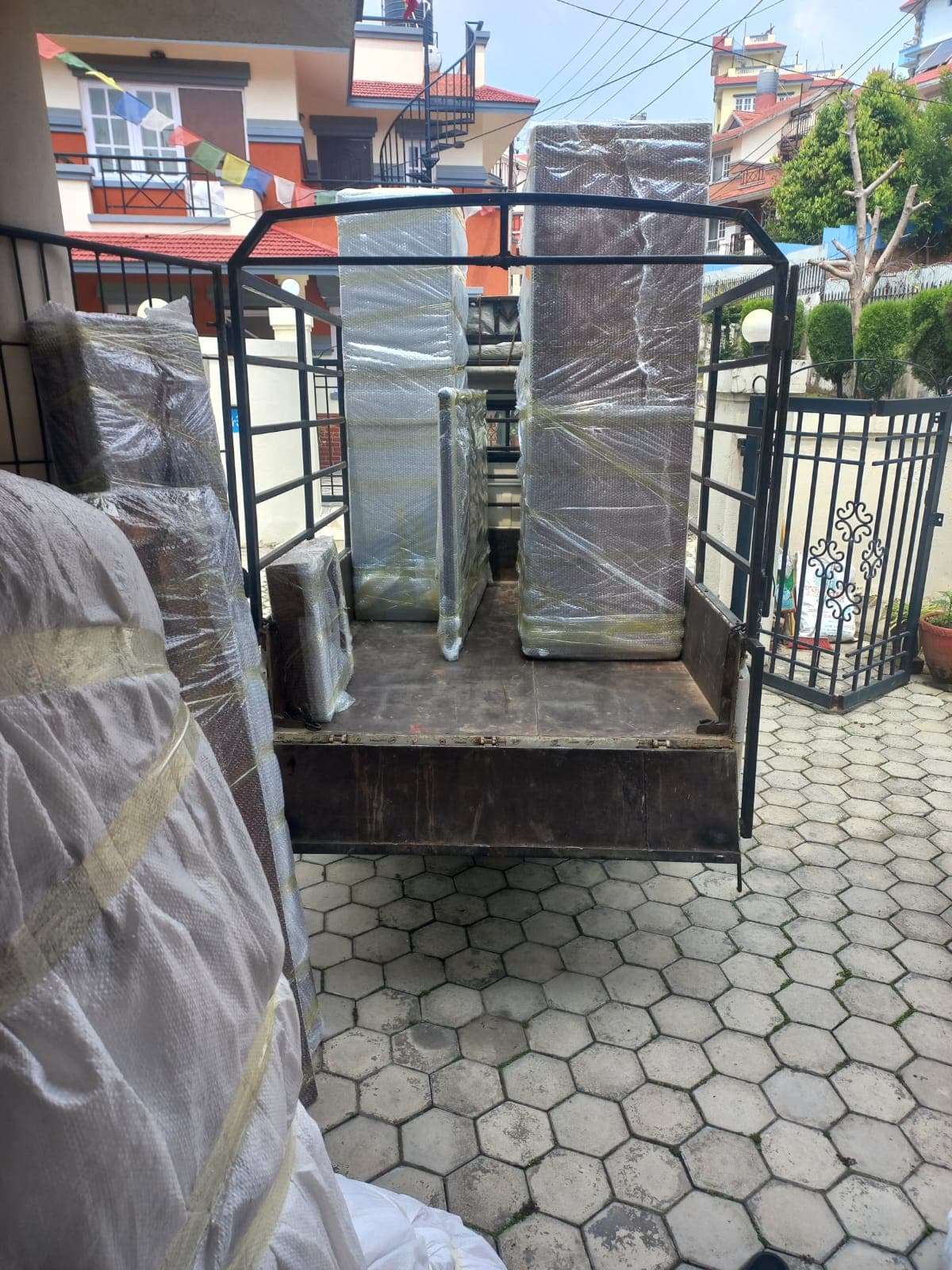
Nepal City Packers and Movers' direct responsibility sits primarily within the Facilities and Execution workstreams — the comprehensive site survey, floor-plan-based furniture and equipment placement, anti-static handling for IT infrastructure, and coordinated execution whether your organization chooses a single-event or phased approach.
For a corporate-scale relocation, this means working closely with your internal project team throughout the process — not just showing up on moving day — so the physical relocation genuinely supports the broader plan your organization has built across every other workstream on this checklist.
How is a corporate move checklist different from a standard office move checklist?
A corporate checklist is organized by workstream (leadership, IT, HR, legal, vendors, facilities) with distinct ownership for each, reflecting the cross-departmental complexity of a larger organization, rather than a single linear timeline one coordinator can manage alone.
Who should own the overall corporate move checklist?
Ideally an executive sponsor with authority over timeline and budget decisions, supported by a cross-departmental project team with specific ownership assigned for facilities, IT, HR, and legal/vendor coordination.
How far in advance should corporate move planning begin?
Generally 8-12 weeks or more before the target move date, considerably longer than a standard office move, given the added complexity across every workstream covered in this checklist.
What's the most critical workstream to get right in a corporate move?
IT and data continuity is often the highest-stakes workstream, since IT sequencing issues are typically the biggest driver of extended, costly downtime after a corporate relocation.
Should IT infrastructure setup happen before or after the physical furniture move?
Before, ideally — network and server infrastructure should be set up and tested at the new location ahead of general furniture and staff arrival, so the organization can resume operations quickly rather than waiting for connectivity after everyone has already arrived.
How does the checklist differ for a phased versus single-event corporate move?
A phased move requires additional planning around IT continuity across two simultaneously operating locations, department sequencing strategy, and more extended employee communication, while a single-event move concentrates the same tasks into a shorter, more intensive window.
What legal and administrative tasks are unique to corporate-scale moves?
Commercial lease coordination with potentially more complex terms, business registration updates that may involve more complex structures than a small business, and systematic updates across a typically larger set of vendor, financial, and compliance relationships.
How should employee communication be structured for a large organization?
Through a formal, phased plan — an early initial announcement, followed by department-specific timelines, and finally detailed moving-day instructions — supported by department-level points of contact rather than a single blanket message.
What should be included in the post-move phase of the checklist?
System testing before declaring departments operational, tracking and resolving outstanding issues, completing any remaining administrative updates, gathering employee feedback, and conducting a formal review of what worked and what didn't.
How is budget different for a corporate move checklist compared to a smaller office?
Corporate budgets should include an explicit contingency allocation and account for a wider range of cost drivers — IT infrastructure setup, potential phased-move labor costs, and administrative/legal coordination — beyond just the direct moving service quote.
Does every corporate move need a dedicated project team, or can one person manage it?
For anything beyond a small office, a single coordinator genuinely isn't sufficient — the cross-departmental complexity covered throughout this checklist benefits significantly from distributed ownership across facilities, IT, HR, and legal/vendor workstreams.
How do vendor and client notifications differ at corporate scale?
Corporate organizations typically maintain more vendor relationships and often have more client-facing operations, requiring a more systematic approach to notification — proactive communication to key clients and partners, not just a passive address update on a website.
What happens if IT continuity isn't planned properly for a corporate move?
This is the most common source of extended, costly downtime — without proper sequencing and testing before staff arrival, employees can arrive at a fully furnished but non-functional workspace, multiplying lost productivity across the organization.
How long should a business budget for full post-move settling in?
Often several weeks beyond the physical relocation itself, particularly for larger organizations, given the time needed for full system testing, outstanding issue resolution, and genuine organizational adjustment to the new space.
Can Nepal City Packers and Movers work alongside an internal corporate move project team?
Yes — Nepal City Packers and Movers' role centers on the facilities and execution workstreams specifically, coordinating closely with an organization's internal project team on floor planning, IT-appropriate handling, and execution sequencing, whether the organization has chosen a single-event or phased approach to its relocation.

A corporate move succeeds when every workstream — governance, IT, HR, legal, vendors, facilities — has clear ownership and its own timeline, not when one person tries to track everything on a single list.
Assign ownership, work each workstream in parallel, and when it's time for the physical relocation itself, Nepal City Packers and Movers can execute the facilities and logistics side with the same discipline your organization has built into the rest of the plan.

Nepal City Packers and Movers
Share:
Explore Our Range of Moving & Logistics Services

Experience fast and reliable domestic and international courier services with Nepal City Packers and Movers. Secure delivery for all your packages, locally and globally!

Explore additional services by Nepal City Packers and Movers, including loading, unloading, parking assistance, and more. Tailored solutions for all your needs!

Explore reliable two-wheeler transport services by Nepal City Packers and Movers. Safe, secure, and timely bike transportation locally or across Nepal. Contact us today!
 Nepal City Packers and Movers - Banepa, Kavre
 Top Packers and Movers - Bouddha, Kathmandu
 Professional Packers and Movers - Balaju, Kathmandu
 Reliable and Affordable Packers and Movers - Baluwatar, Kathmandu
 Top-Rated Packers and Movers - Maharajgunj, Kathmandu
 Leading Packing and Moving Service | Nepal City Packers and Movers - Durbarmarga, Kathmandu
 Nepal city packers and movers - Lalitpur, Nepal
 Nepal City Packers and Movers - Thimi, Bhaktapur
 Reliable Packers and Movers - Kupandole, Lalitpur
 Affordable and Reliable Packers and Movers - kalanki, Kathmandu