
Loading…

Most people only think about whether a mover is trustworthy once, and it's usually the night before moving day, staring at a WhatsApp thread with someone they've never met in person, wondering if the "advance payment" they were just asked for is normal or the first move in a scam. That single moment of doubt is what this guide is built around.
Kathmandu's moving industry is crowded and largely informal. Anyone with a pickup truck, a phone number, and a Facebook page can call themselves a "packers and movers" service, and plenty do — especially in the weeks before Dashain and Tihar, when half the valley seems to be shifting apartments at once. Some of these outfits are perfectly capable. Others disappear the moment your sofa is on the truck. The difference rarely shows up in a shiny website; it shows up in a dozen small, checkable details most people never think to look for until something has already gone wrong.
This guide walks through exactly what those details are: how legitimate movers in Nepal are actually registered, the specific red flags that show up before, during, and after a bad move, the questions worth asking on the phone before you commit to anything, and what to do if you've already handed your keys and your kitchen set to someone you're now not sure about.
Before the deep dive, here's the checklist worth screenshotting. If a mover you're considering hits three or more of these, slow down.
| Warning Sign | Why It Matters |
|---|---|
| Quote given only over phone or chat, never in writing | No written estimate means no proof of what you agreed to pay |
| Demands full payment or a large cash advance before the move | Legitimate movers in Nepal typically ask for a partial advance, not the full amount, and rarely insist on cash only |
| No registered office or verifiable branch address | A real company can point you to a physical location, not just a meeting spot |
| Truck has no company signage, name board, or visible number plate details | Unmarked vehicles are hard to trace if something goes missing |
| Refuses to prepare a written inventory of your goods | Without an inventory, there's no record to dispute damage or loss against |
| Reviews are all five stars, all recent, and read like they were written by the same person | A pattern common in bought or incentivized reviews |
| Crew shows up different from who you spoke to, with no ID or uniform | Makes it harder to hold anyone accountable on the day |
| Price changes upward once your goods are already loaded | A classic "hostage" tactic used to squeeze extra cash out of a captive customer |
| Can't or won't share a PAN number or company registration detail | Legally operating businesses in Nepal are required to have one |
| No answer to "what happens if something breaks?" | Reveals whether liability was ever actually considered |
In many countries, moving companies are licensed, bonded, and insured under a single regulator, and a quick database search tells you who's legitimate. Nepal doesn't have an equivalent single-window check for the moving and relocation trade specifically, which means the burden of verification falls almost entirely on the customer.
A few things make this worse in practice. First, the barrier to entry is close to zero — a phone, a rented or borrowed truck, and a Facebook business page are enough to start advertising "ghar sarne" (house-shifting) services, with no capital, no fixed premises, and no long-term stake in a reputation. Second, demand spikes hard and predictably around Dashain and Tihar, when many families move into new rentals before the festivals, and again at the start and end of the academic year when students and young professionals relocate.
That seasonal crunch pulls in temporary, fly-by-night operators who vanish once the rush is over, and it also pushes genuine companies' schedules to the limit, which unreliable outfits exploit by undercutting on price and overpromising on availability. Third, most transactions in this sector are still settled in cash, with no formal contract, which makes disputes almost impossible to prove after the fact.
None of this means every unregistered, low-cost mover is dishonest — plenty of small local crews do good, honest work for years on reputation alone. It means the paperwork and process that normally separate "trustworthy" from "unclear" don't exist by default in this market. You have to build that separation yourself, which is exactly what the rest of this guide helps you do.
Before you can spot a fake, it helps to know what "real" looks like on paper. A company legally operating a moving, packing, or logistics business in Nepal typically has all of the following:
| Requirement | Issuing Authority | What It Proves |
|---|---|---|
| Company registration certificate | Office of the Company Registrar (OCR), under the Companies Act, 2063 | The business exists as a legal entity, not just a personal phone number |
| PAN (Permanent Account Number) | Inland Revenue Department (IRD) | The business is registered for tax purposes and issues traceable bills |
| VAT registration (where applicable) | Inland Revenue Department (IRD) | Larger operators are formally accountable for the services they bill |
| Local ward-level business registration | The ward office where the business operates | The business has a verifiable, physical local presence |
| Vehicle registration ("blue book") and route permit | Department of Transport Management | The truck itself is legally allowed to operate and can be traced by plate number |
You don't need to personally audit a company's tax filings before booking a move. But asking "can I get a bill with your PAN number on it?" is a fair, ordinary question, and a legitimate company will answer it without hesitation. A company that gets cagey about a PAN, gives a citizenship number instead, or claims "we don't do that for house-shifting jobs" is telling you something important about how it operates.
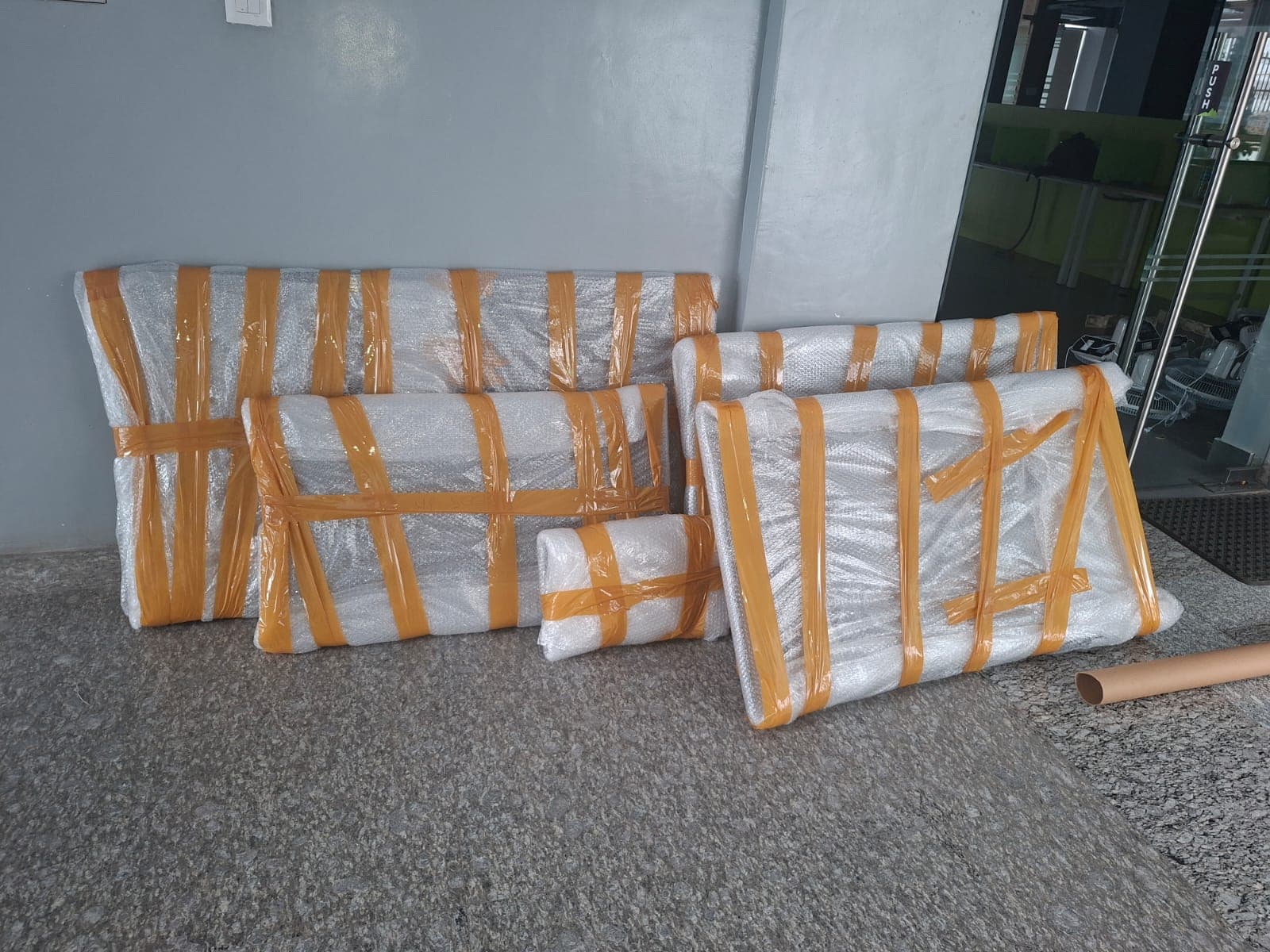
Paperwork is boring, which is exactly why unreliable movers avoid it — and exactly why you should insist on it.
Price is where most moving scams in Nepal start, because it's the easiest lever to manipulate.
How a company talks to you before it has your money often predicts how it will treat you after.
This is the most serious category, because it involves your belongings being used as leverage.
If you ever find yourself in this situation, the instinct to just pay and end the standoff is understandable, but it's worth pausing long enough to document everything (see the section below on what to do if this happens to you).
Some of the clearest signals only appear once a truck is actually in front of you.
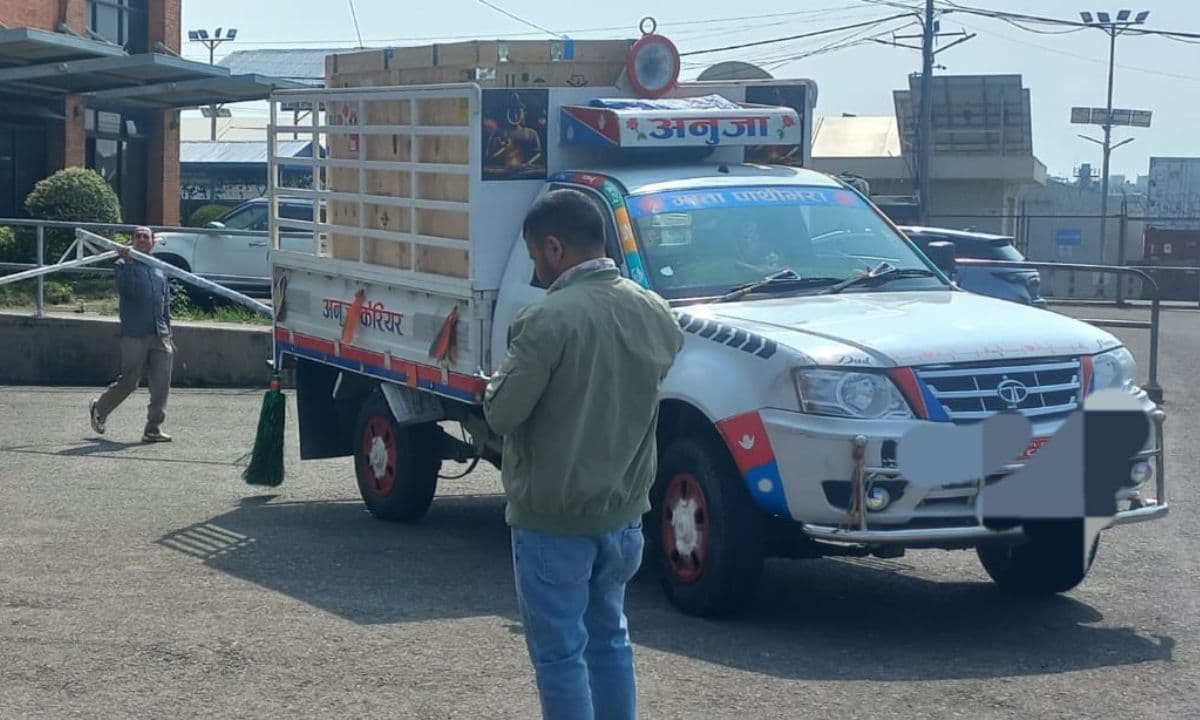
Reviews are useful, but only if you know how to read past the fake ones.
A few things about moving in Nepal specifically change how you should read the red flags above.
Kathmandu Valley's geography works against improvisation. Narrow lanes in older neighborhoods, limited lift access in many apartment buildings, and dense traffic on the Ring Road mean a mover genuinely needs the right size vehicle and enough crew to carry goods manually over longer distances than in a typical planned city. A company that hasn't asked about your building's access — floor number, lift availability, road width for the truck — before quoting a price is likely quoting blind, which is exactly how mid-move "extra charges" get justified later.
Dashain and Tihar create a seasonal squeeze. These festivals fall in the Nepali months of Ashwin and Kartik (typically September through November), and it's a culturally popular window to move into a new home before the celebrations. Genuine, established companies get booked out weeks in advance during this period. If someone with no track record suddenly has "immediate availability" at a bargain price during peak festival season, that ease of booking is itself worth questioning rather than treating as good luck.
Monsoon season adds real operational risk. Between roughly June and September, heavy rain affects road conditions on highway routes outside the valley (toward Pokhara, Chitwan, or the Tarai) and increases the chance of delays or water damage to poorly protected goods. A mover who has no plan for weatherproofing (tarpaulins, plastic sheeting, waterproof covers for electronics and documents) during this season is underprepared, not just unlucky.
Cross-border and international moves add another layer. If you're relocating internationally rather than shifting within the valley, customs documentation, courier partnerships, and cargo insurance become relevant, and the bar for verifying a company's legitimacy should go up accordingly — a company that handles this responsibly is worth the extra scrutiny to confirm.
A short phone call can surface most of the red flags above before you ever commit. Ask these directly and pay attention not just to the answers, but to how comfortably they're given.
| Question | What a Good Answer Sounds Like |
|---|---|
| Can you send me a written quote with a breakdown of charges? | Yes, immediately, without hesitation |
| Is this company registered, and can I get a bill with your PAN number? | A clear yes, with no deflection |
| What percentage is due as advance, and when is the balance due? | A specific, reasonable split — not "full payment now" |
| Will you prepare an inventory list before loading? | Yes, standard practice |
| What happens if something is damaged or lost in transit? | A clear liability or compensation policy, ideally in writing |
| Who will be on-site supervising the crew on moving day? | A named person or role, not a vague "the team will handle it" |
| Can I see photos or examples of past moves? | Real, specific examples — not just a generic portfolio |
| What's your policy if I need to reschedule or cancel? | A defined, reasonable policy, not "we'll figure it out" |
| Do you have a physical office I could visit? | A real address, freely given |
If red flags are showing up after you've already booked, or worse, on moving day itself, here's a practical sequence to follow.
None of this guarantees a full recovery of money or goods, but each step meaningfully improves your position, and taken together they turn a one-sided situation back into a documented dispute.
Everything above is really one idea repeated in different forms: a reliable mover has nothing to hide, and it shows in small, checkable ways — a written quote, a real office, a PAN number offered without hesitation, an inventory prepared without being asked twice.
That's the standard Nepal City Packers and Movers is built around, and it's worth checking any company against it, including this one. A legitimate operator should be happy to walk you through its service coverage and branch locations, answer questions honestly, and provide a documented estimate before a single box gets packed.
If you're planning a move and want a second opinion on a quote you've received, or you'd like to compare it against a transparent, written estimate, the contact page is the fastest way to start that conversation — even if you end up choosing someone else, you'll have a clearer baseline to judge them against.
If you're still early in planning, it's worth reading through a step-by-step house-shifting checklist alongside this guide, and if you're moving internationally rather than within the valley, the added documentation and customs considerations are covered separately in the guide to international relocation.
For the specific worries most people carry into a move — breakage, delays, hidden costs — there's also a direct breakdown of common moving concerns and how they're addressed, and a look at what tends to set a mover apart once you know what to look for.
1. What's the single biggest red flag when hiring a mover in Nepal?
Refusing to put anything in writing — no quote, no inventory, no bill. Almost every other problem (price changes, disputes over damage, unclear liability) becomes far harder to resolve once there's no paper trail to point to.
2. Is it normal to pay a moving company in cash in Nepal?
Partial cash payment is common, but full payment in cash before the job is done, with no bill issued, removes your leverage and your evidence. A company that can issue a proper bill with a PAN number is generally a safer bet.
3. How much advance payment is reasonable for a house-shifting job?
There's no fixed national rate, but a partial advance to confirm the booking (rather than full payment upfront) is the more common and safer standard. Be cautious of anyone insisting on 100% payment before the move even starts.
4. Should I ask for a written contract for a local move within Kathmandu?
Yes, even a simple one-page document or a written message confirming the date, items, price, and payment terms is far better than a verbal agreement, and any reasonable company will happily provide one.
5. How can I check if a moving company is actually registered?
Ask for their PAN number and company name as registered with the Office of the Company Registrar. You can also ask for a proper bill after payment, which should carry these details by default for a properly registered business.
6. Why do movers ask for extra money after the goods are already loaded?
This is a known pressure tactic — once your belongings are on the truck, you have far less negotiating power, which some operators exploit deliberately. It's one of the clearest signs of an unreliable mover.
7. What should I do if a mover refuses to unload until I pay more than agreed?
Document the demand (screenshots, recordings, witnesses) rather than negotiating verbally alone, avoid escalating the confrontation physically, and involve the police if the situation feels like extortion rather than a billing disagreement.
8. Are online reviews reliable for choosing a mover in Nepal?
They're useful but not foolproof. Be wary of reviews that are all five stars, posted in a tight cluster, and vaguely worded. A more trustworthy signal is a mix of reviews with specific, varied details.
9. What's the best time of year to move in Kathmandu to avoid the worst of the rush?
Outside the Dashain–Tihar period (roughly September to November) and outside the start/end of the academic year tends to be less competitive for booking, giving you more room to compare quotes without time pressure.
10. Does monsoon season affect moving in Nepal?
Yes. Heavy rain between roughly June and September can affect road conditions, especially on routes outside the Kathmandu Valley, and increases the risk of water damage to poorly protected goods. Ask any mover directly how they weatherproof items during this period.
11. What items are most commonly damaged during a move in Nepal?
Fragile and heavy items handled without proper packing material — glassware, electronics, and furniture carried through narrow stairwells or tight lanes without corner protection — see the most damage when a crew is inexperienced or rushing.
12. Should I supervise the entire move myself, or can I leave it to the crew?
Being present, especially during loading and unloading, lets you verify the inventory as it happens and catch damage or missing items immediately rather than discovering them later with no clear point of blame.
13. What's the difference between a packing charge and a labor charge?
Packing charges typically cover materials and the work of wrapping and boxing items; labor charges cover the physical carrying, loading, and unloading. A transparent quote should separate these rather than bundling everything into one number.
14. Can I get insurance for my goods during a move in Nepal?
Some established movers offer basic protection or can arrange goods-in-transit coverage for higher-value moves, particularly for long-distance or international relocations. Ask specifically, since it's rarely offered unless requested.
15. What should an inventory list actually include?
A description of each item or box, its condition before loading (noting any existing damage), and ideally a count that both you and the crew sign off on before the truck leaves.
16. Is it safe to hire a mover found only through a Facebook post?
Not automatically unsafe, but it deserves extra verification — ask for a registered business name, PAN number, and a proper written quote before treating a Facebook listing the same way you'd treat an established company.
17. What can I do if my goods are damaged and the mover refuses to compensate me?
If you have a written agreement, inventory, and photo evidence, you have grounds to file a formal complaint with the Department of Commerce, Supplies and Consumer Protection, or pursue the matter through Nepal's consumer courts.
18. How far in advance should I book a mover during Dashain or Tihar?
Several weeks ahead if possible. Reliable, established companies fill their schedules quickly during this period, and last-minute "availability" from an unfamiliar company is worth extra scrutiny rather than relief.
19. Do I need a different type of mover for an office relocation versus a house move?
Office moves often involve IT equipment, sensitive documents, and coordination around business hours, so it's worth confirming a mover has specific experience with commercial relocations rather than assuming household experience automatically transfers.
20. What's the simplest way to compare quotes from different movers fairly?
Ask every company the same set of questions — written estimate, inventory process, advance percentage, damage policy — and compare answers side by side rather than comparing price alone. The lowest number is meaningless without knowing what it does and doesn't include.
None of this requires becoming a legal expert or a professional skeptic. It just requires treating a house full of belongings the way you'd treat any other significant transaction: get it in writing, ask the questions that matter before the money changes hands, and pay attention to how a company behaves when nothing has gone wrong yet. The movers worth trusting are usually the ones who make that easy.

Nepal City Packers and Movers
Share:
Explore Our Range of Moving & Logistics Services

Experience fast and reliable domestic and international courier services with Nepal City Packers and Movers. Secure delivery for all your packages, locally and globally!

Explore additional services by Nepal City Packers and Movers, including loading, unloading, parking assistance, and more. Tailored solutions for all your needs!

Explore reliable two-wheeler transport services by Nepal City Packers and Movers. Safe, secure, and timely bike transportation locally or across Nepal. Contact us today!
 Nepal City Packers and Movers - Banepa, Kavre
 Top Packers and Movers - Bouddha, Kathmandu
 Professional Packers and Movers - Balaju, Kathmandu
 Reliable and Affordable Packers and Movers - Baluwatar, Kathmandu
 Top-Rated Packers and Movers - Maharajgunj, Kathmandu
 Leading Packing and Moving Service | Nepal City Packers and Movers - Durbarmarga, Kathmandu
 Nepal city packers and movers - Lalitpur, Nepal
 Nepal City Packers and Movers - Thimi, Bhaktapur
 Reliable Packers and Movers - Kupandole, Lalitpur
 Affordable and Reliable Packers and Movers - kalanki, Kathmandu