
Loading…
Selling a scooter in Kathmandu to a buyer in Pokhara. Relocating for a job in Biratnagar and not wanting to ride a fully loaded motorcycle across the country. Sending a bike home to family in another district. These are all genuine, common situations across Nepal, and all of them raise the same practical question: how do you actually get a two-wheeler from one city to another without riding it yourself?
This guide covers how scooter and motorcycle transport works in Nepal — how vehicles are packed and secured for transit, what documentation you should have on hand, what genuinely affects cost, and what to check before trusting a transporter with your bike. Nepal City Packers and Movers offers bike and scooter transport alongside its household and office moving services, and the guidance below reflects how this service should actually be handled from pickup to delivery.
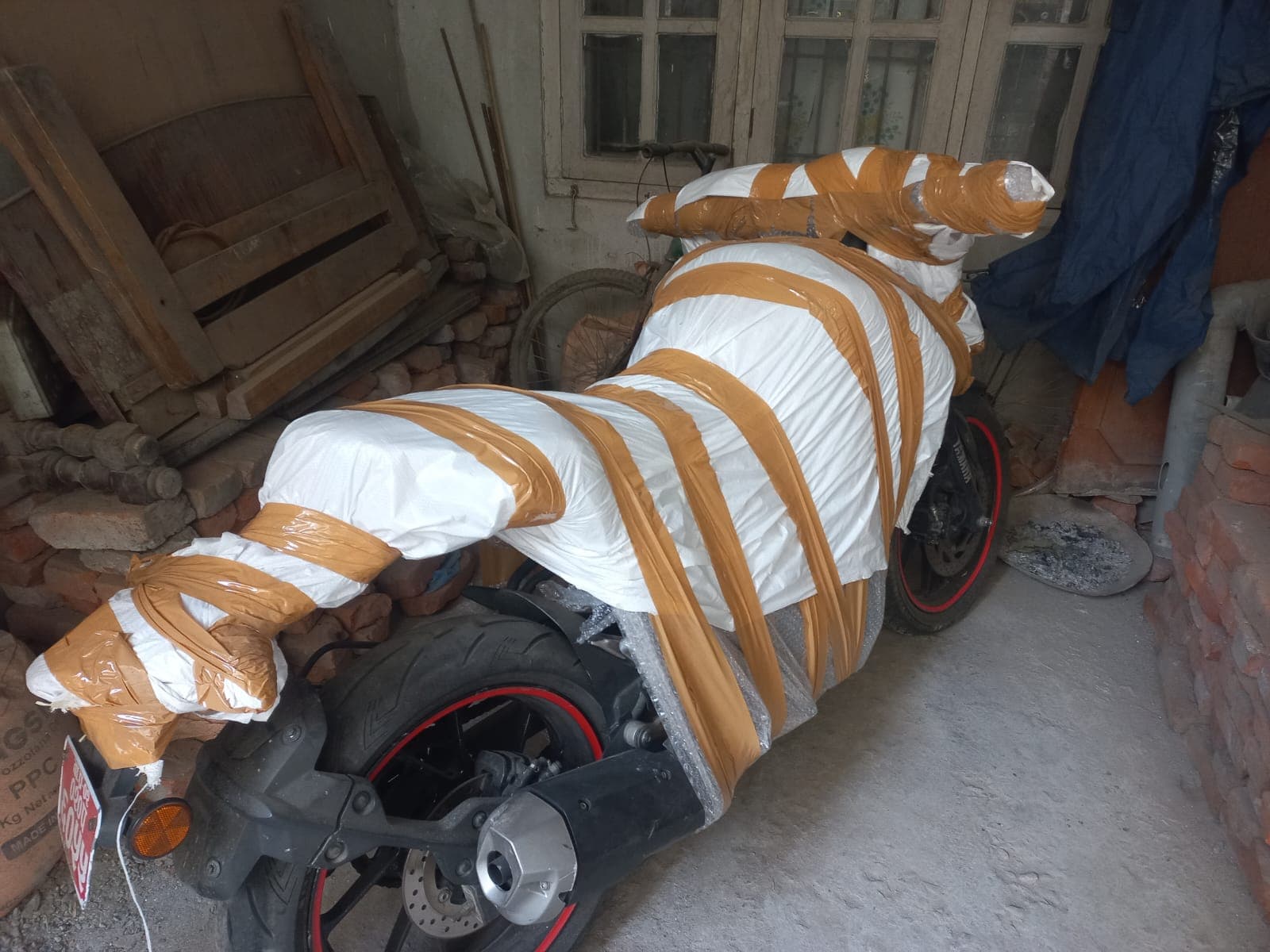
Moving a two-wheeler is meaningfully different from moving furniture or boxes. A motorcycle or scooter is a mechanical, registered vehicle with its own weight, balance, and vulnerable components — mirrors, indicators, fuel systems, and painted surfaces that scratch easily. It can't simply be wrapped in a blanket and stacked with other cargo; it needs to be secured upright (or properly cushioned if laid on its side), often loaded onto a truck bed using a ramp, and tied down in a way that prevents it from tipping or shifting during transit.
This is exactly why dedicated bike and scooter transport exists as its own service line among moving and logistics providers in Nepal, distinct from general cargo or household shifting.
People relocating between cities. Someone moving from Kathmandu to Pokhara, Biratnagar, Butwal, or elsewhere for work, study, or family reasons, who doesn't want to ride a loaded bike over a multi-hour highway route.
Buyers and sellers of secondhand two-wheelers. A common scenario in Nepal's active secondhand vehicle market — a buyer purchasing a bike or scooter from a seller in a different city needs it transported rather than ridden, especially if the buyer isn't traveling to collect it in person.
Families sending a vehicle to a relative. Gifting or transferring a bike or scooter to family members living in another part of the country.
Businesses relocating fleet vehicles. Delivery services, rental companies, or businesses with multiple two-wheelers needing to reposition vehicles between branches or locations.
Anyone whose bike needs servicing or repair away from home. Less common, but a genuine use case — transporting a vehicle to a specific service center or dealership in another city.
Pickup. The transporter collects the vehicle from your specified location — your home, a seller's address, or a dealership — rather than requiring you to bring it to a depot, which is the standard door-to-door approach most providers in Nepal offer.
Preparation for transport. Before loading, the vehicle is prepared — this typically includes draining or reducing fuel to a minimal level (a full tank adds weight and carries fire-safety risk during transit), securing or removing loose accessories (mirrors are often folded in or removed if they protrude significantly), and checking tire pressure.
Loading. The vehicle is loaded onto the transport vehicle — commonly a pickup truck or a mini truck of the type used across Nepal's goods transport network — typically using a ramp, since lifting a motorcycle or scooter by hand risks both injury and vehicle damage.
Securing. Once loaded, the bike is strapped down securely, using straps that hold the frame and wheels in place so the vehicle can't tip, roll, or shift during the journey, particularly important given Nepal's winding hill roads and the vibration involved in a multi-hour highway trip.
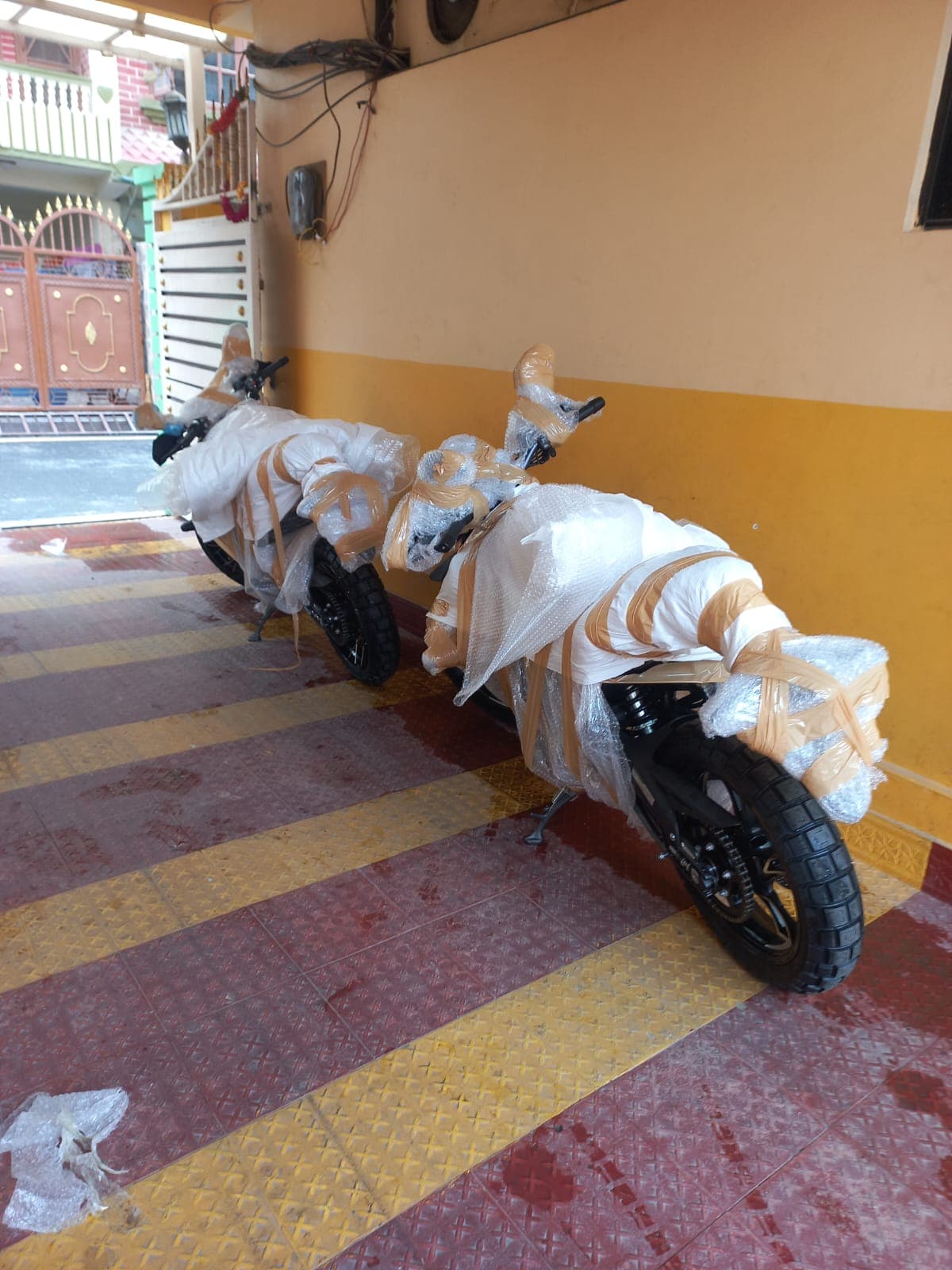
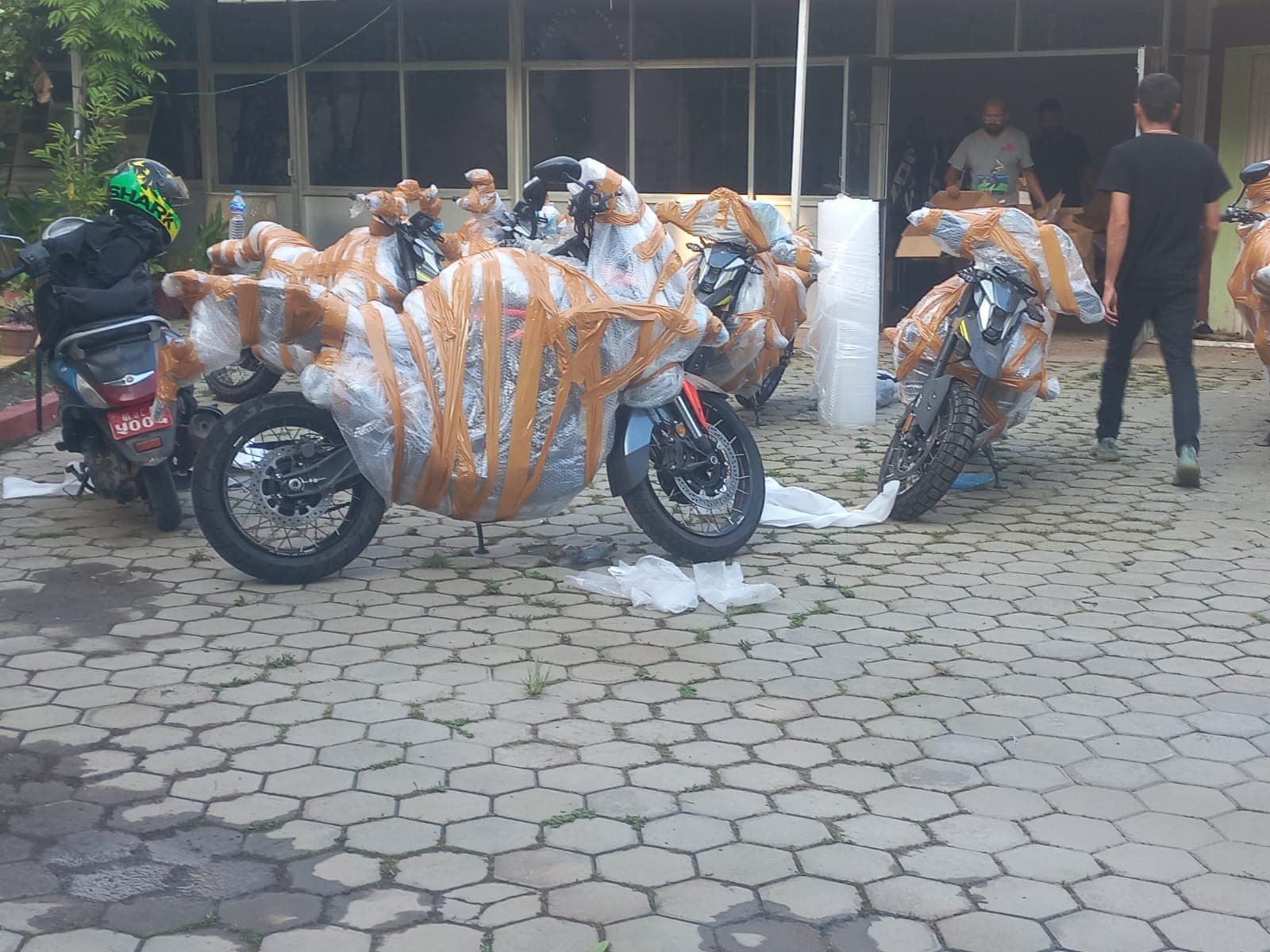
Protective wrapping. Especially for higher-value or newer bikes, some protective wrapping or padding around vulnerable areas — the fuel tank, mirrors, exhaust — helps prevent scratches and minor damage during loading, transit, and unloading.
Transit. The vehicle travels to its destination, either as a dedicated single-bike transport or alongside other cargo/goods being moved on the same route, depending on the provider and the specific booking.
Delivery and unloading. At the destination, the bike is unloaded (again typically via ramp) and delivered to the specified address, completing the door-to-door service.
A few practical steps make the process smoother and protect you if any dispute arises later:
Since a motorcycle or scooter is a registered vehicle, a few documentation points are worth understanding, though the specifics can vary by situation and it's worth confirming current requirements directly with your transporter or, for anything involving a change of ownership, with the relevant transport authority.
Proof of ownership. The vehicle's registration certificate (commonly called the bluebook in Nepal) is the primary proof of ownership and should generally be available at both pickup and delivery, particularly relevant if you're the vehicle owner and not physically present for either end of the transport.
Sale transactions. If the transport is happening as part of a buy-sell transaction between two individuals, the ownership transfer process (registration transfer at the relevant transport management office) is a separate matter from the physical transport itself — the vehicle can be transported before, during, or after the ownership paperwork is completed, but it's worth clarifying with both the buyer, seller, and transporter who is responsible for what, and when transfer paperwork will be handled.
Insurance. If your vehicle carries an active insurance policy, it's worth checking whether that coverage has any relevance to transport-related incidents, and separately asking your transport provider about their own liability coverage for damage during transit — these are typically two distinct things, and confirming both avoids a gap in protection.
Third-party pickup/delivery. If someone other than the registered owner is handing over or receiving the vehicle (a family member, a hired agent, or the counterpart in a sale), it's worth having a clear, ideally written, understanding of who is authorized to do so, particularly for higher-value transactions.
| Method | Description | Best Suited For |
|---|---|---|
| Dedicated single-bike transport | Your vehicle is the sole or primary cargo for that specific trip | Higher-value bikes, urgent timelines, extra peace of mind |
| Shared/consolidated transport | Your bike travels alongside other goods or vehicles on the same route | More budget-friendly, works well for standard timelines |
| Rider-accompanied transport | You or a hired rider actually rides the bike, sometimes with the transporter handling logistics/coordination | Shorter distances, riders comfortable with the route |
Most Nepal-based bike transport providers focus on the truck-based transport model — loading the vehicle onto a truck rather than having someone ride it — since this avoids the wear, fuel cost, and road risk of a long-distance ride, and is the standard, most commonly offered approach across the market.
| Factor | Why It Matters |
|---|---|
| Distance between pickup and delivery | The primary driver — longer routes mean more fuel, time, and driver cost |
| Vehicle type and size | Larger or heavier motorcycles may cost more to transport than smaller scooters |
| Dedicated vs. shared transport | A dedicated single-vehicle trip generally costs more than sharing space with other cargo |
| Urgency/timeline | Faster, prioritized delivery may carry a premium over standard scheduling |
| Pickup/delivery location accessibility | Locations in narrow lanes or hard-to-access areas may add to loading/unloading time and cost |
| Additional protective packing | Extra padding or wrapping for higher-value bikes may be offered as an add-on |
| Season | Festival-season demand (Dashain, Tihar) and monsoon-season road conditions can affect both pricing and availability |
For an accurate quote, share your vehicle type, exact pickup and delivery locations, and your preferred timeline — a provider quoting a flat rate without this information is estimating rather than pricing your specific situation.
A few safety-related points worth understanding, both for your own preparation and to evaluate whether a transporter is handling the job properly:
Fuel level matters for safety, not just weight. Transporting a vehicle with a full or near-full fuel tank increases fire risk during loading, transit, and unloading — reputable transporters will ask you to reduce fuel to a minimal level before pickup.
Proper strapping prevents the most common transit damage. A bike that isn't adequately secured can shift or tip during transport, particularly on winding hill roads or with sudden braking — ask your transporter directly how they secure vehicles, and look for straps anchored to the frame rather than to non-structural parts.
Loading and unloading via ramp reduces injury and damage risk. Attempting to lift a motorcycle by hand onto a truck bed is both physically risky for the people involved and more likely to result in accidental drops or scratches than a proper ramp-based loading process.
Weather protection matters for longer routes. For transport during monsoon season (roughly June through September) or over longer distances, ask whether the vehicle will have any covering or protection from rain during the journey, particularly if it's being transported on an open truck bed.
Route familiarity affects overall safety and timing. A driver experienced with a specific intercity route — for example, the roughly 6-to-8-hour Kathmandu-Pokhara corridor via the Prithvi Highway — is generally better positioned to navigate safely and predict realistic timing than one unfamiliar with the route's specific conditions.
Bike and scooter transport timelines generally follow the same road-based intercity travel realities that apply to any goods transport in Nepal:
| Route Example | Approx. Travel Time | Notes |
|---|---|---|
| Within Kathmandu Valley | Same day | Fastest tier, minimal distance involved |
| Kathmandu ↔ Pokhara | Roughly 6-8 hours by road (via Prithvi Highway) | May extend during monsoon season or heavy traffic |
| Kathmandu ↔ Chitwan/Bharatpur | Generally under 5 hours | Shorter route via the same corridor |
| Kathmandu ↔ Butwal | Roughly 6-6.5 hours | Similar road conditions to the Pokhara route |
| Kathmandu ↔ Biratnagar | Roughly 8-9 hours | Longer eastern route; may involve overnight logistics depending on the provider |
If your bike is traveling alongside other cargo (shared/consolidated transport) rather than as a dedicated single-vehicle trip, total delivery time may extend slightly depending on the transporter's route and schedule for other deliveries along the way.
Not documenting the vehicle's condition before handover. Without pre-transport photos, it's genuinely difficult to establish whether a scratch or dent happened during transit or existed beforehand — this single step protects both you and the transporter from disputes.
Leaving a full fuel tank. Beyond the safety risk, this is one of the most common preparation oversights — always check with your transporter about their specific fuel-level expectations before pickup.
Not confirming the transporter's damage/liability policy in advance. Asking after something goes wrong is far less useful than confirming clearly beforehand what happens if the vehicle is damaged during transit.
Assuming any general goods transporter can handle a two-wheeler properly. Bike and scooter transport genuinely requires specific handling knowledge — proper strapping technique, ramp loading experience, and care around vulnerable components — that a general cargo-only operation may not have. Confirm your provider has specific, genuine experience with vehicle transport, not just general goods.
Not confirming exact pickup/delivery contact details. For transactions involving a buyer and seller in different cities, unclear communication about who's handing over and receiving the vehicle, and at which specific address, is a common source of delay and confusion.
A few concrete checks before booking:
Confirm the provider has specific, genuine experience with two-wheeler transport, not just general cargo or household goods — the loading, strapping, and handling techniques are meaningfully different. Ask directly how vehicles are secured during transit and what protective measures (padding, wrapping) are used, especially for a higher-value bike. Get a clear price confirmed before pickup, based on your specific route and vehicle type, rather than a vague estimate.
Ask about their damage/liability policy explicitly, and get it in writing if possible. Check for real, verifiable reviews — Google reviews specifically, since these are harder to fake in volume than testimonials on a company's own website. And for any transaction involving a buyer and seller in different locations, confirm the specific pickup and delivery contacts and addresses clearly with all parties before the transporter is dispatched.
Nepal City Packers and Movers offers bike and scooter transport as part of its broader moving and logistics services, applying the same careful handling, clear communication, and door-to-door coordination used across its household, office, and cargo services to the specific needs of transporting a two-wheeler safely between cities.
Can I transport my scooter or motorcycle between cities in Nepal without riding it?
Yes, this is exactly what dedicated bike and scooter transport services are for — your vehicle is loaded onto a truck, secured, and transported door-to-door without you or anyone else needing to ride it.
How is a motorcycle secured during transport to prevent damage?
Vehicles are typically loaded via ramp onto a truck bed and then strapped down securely, with straps anchored to the frame and wheels to prevent tipping, rolling, or shifting during transit, particularly important on winding hill roads.
Should I empty the fuel tank before transporting my bike?
You should reduce the fuel level significantly, as most transporters recommend, both for safety reasons (fire risk) and because it affects the vehicle's weight during loading and transit. Confirm the specific expectation with your transporter.
How long does it take to transport a bike from Kathmandu to Pokhara?
The road journey is typically 6 to 8 hours via the Prithvi Highway, similar to any road-based transport on this route. This can extend during monsoon season or heavy traffic conditions.
Is it safe to transport a bike during monsoon season?
It can be, but ask specifically about weather protection or covering for the vehicle during transit, particularly if it's being transported on an open truck bed, given the extended rain exposure risk during the monsoon period (roughly June through September).
What documents do I need to have ready when transporting my vehicle?
Your vehicle's registration certificate (bluebook) should generally be accessible at both pickup and delivery as proof of ownership, particularly important if you're not personally present for either end of the transport.
Can I transport a bike I just bought secondhand from someone in another city?
Yes, this is a common use case for bike transport services. It's worth clarifying communication and responsibilities clearly between yourself, the seller, and the transporter, including exact pickup and delivery details.
Does bike transport cost more for a dedicated single-vehicle trip versus sharing space with other cargo? Generally yes — a dedicated transport, where your bike is the sole or primary cargo for that trip, typically costs more than a shared/consolidated arrangement where your vehicle travels alongside other goods.
What happens if my bike is damaged during transport?
This is exactly why confirming a transporter's damage/liability policy before handover matters — ask directly and, where possible, get this in writing, and document your vehicle's pre-transport condition with photos so any dispute has a clear reference point.
Can scooters be transported the same way as motorcycles?
Yes, the same general loading, securing, and handling principles apply to both, though vehicle type and size can be a factor in cost, and smaller scooters may sometimes be easier to load and secure than larger motorcycles.
How much does it cost to transport a bike between cities in Nepal?
Cost depends on distance, vehicle type, whether it's dedicated or shared transport, urgency, and season. An accurate quote requires sharing your specific route and vehicle details rather than accepting a generic flat-rate estimate.
Is it faster to just ride the bike myself instead of using a transport service?
It depends on your priorities — riding avoids transport cost but means covering the distance yourself, dealing with road and weather conditions, and adding wear to the vehicle. Transport services are generally chosen specifically to avoid these factors, particularly for longer intercity routes.
Do transport providers pick up and deliver directly to my address, or do I need to bring my bike somewhere? Most established providers in Nepal offer door-to-door service, picking up from your specified address and delivering to the destination address, rather than requiring drop-off at a depot.
Can I track my bike during transport?
This varies by provider — ask directly whether tracking or status updates are available during transit, particularly for longer intercity routes where the journey may span several hours or more.
What's the biggest risk during bike transport, and how is it prevented?
Improper securing during transit is one of the most common causes of damage — proper strapping to the vehicle's frame, careful ramp-based loading and unloading, and route-experienced drivers all help minimize this risk.
Can I transport more than one bike or scooter at the same time?
Yes, this is generally possible and can sometimes be more cost-effective per vehicle than transporting a single bike alone, particularly relevant for businesses relocating multiple fleet vehicles or families sending more than one vehicle to the same destination.
Who is responsible for the vehicle's ownership transfer paperwork if it's part of a sale?
This is separate from the physical transport itself and is typically handled between the buyer and seller directly through the relevant transport management office. It's worth clarifying this responsibility clearly, independent of arranging the transport.
What should I check immediately upon delivery of my transported vehicle?
Compare the vehicle's condition against your pre-transport photos, check the odometer reading, and confirm everything (mirrors, accessories, any items in storage compartments) matches what was handed over, addressing any discrepancy with the transporter immediately rather than after time has passed.
Does Nepal City Packers and Movers offer scooter and motorcycle transport alongside its other services?
Yes — Nepal City Packers and Movers provides bike and scooter transport as part of its broader moving and logistics offerings, applying door-to-door coordination and careful handling to two-wheeler transport whether it's a single vehicle move within Kathmandu Valley or an intercity transport to another part of Nepal.
Whether it's a scooter heading to a buyer in another city, a motorcycle relocating with you for a new job, or a bike being sent home to family, proper transport comes down to careful securing, honest documentation of condition, and a provider who treats a two-wheeler as the specific handling job it actually is — not just another piece of cargo.
Share your vehicle details and route with Nepal City Packers and Movers, and get it there safely, door to door.

Nepal City Packers and Movers
Share:
Explore Our Range of Moving & Logistics Services

Experience fast and reliable domestic and international courier services with Nepal City Packers and Movers. Secure delivery for all your packages, locally and globally!

Explore additional services by Nepal City Packers and Movers, including loading, unloading, parking assistance, and more. Tailored solutions for all your needs!

Explore reliable two-wheeler transport services by Nepal City Packers and Movers. Safe, secure, and timely bike transportation locally or across Nepal. Contact us today!
 Nepal City Packers and Movers - Banepa, Kavre
 Top Packers and Movers - Bouddha, Kathmandu
 Professional Packers and Movers - Balaju, Kathmandu
 Reliable and Affordable Packers and Movers - Baluwatar, Kathmandu
 Top-Rated Packers and Movers - Maharajgunj, Kathmandu
 Leading Packing and Moving Service | Nepal City Packers and Movers - Durbarmarga, Kathmandu
 Nepal city packers and movers - Lalitpur, Nepal
 Nepal City Packers and Movers - Thimi, Bhaktapur
 Reliable Packers and Movers - Kupandole, Lalitpur
 Affordable and Reliable Packers and Movers - kalanki, Kathmandu